NEWS

NEWS

Keeping you up to date with Project Seagrass news and views with a mixture of field notes and commentary on seagrass and marine conservation topics.

Dear Santa

Dear Santa, We have tried to be responsible people all year. We are really hoping that this year we get the thing we have always wanted – healthy and productive oceans. We know that people haven’t looked after the oceans from the first time they were given to us, and

Read More »

Isadora Sinha on her Project Seagrass Experience

To give you a bit of an introduction, I am a Cardiff University Genetics (BSc) student going into my final year of my degree and have joined Project Seagrass for a Cardiff University Research Opportunities Programme (CUROP) summer research placement, at their offices in the Sustainable Places Research Institute. I

Read More »

Global fisheries threatened by loss of seagrass

Seafood consumption is both a love and a necessity for hundreds of millions of people all across the world. And the supply of seafood is a key part of maintaining food security for the whole planet. But as demand for seafood is increasing, stocks of wild fish and invertebrates (such

Read More »

2020 Biodiversity agenda: Can we make a difference?

Hello Team Seagrass! My name is Laura and I am an ambassador for Project Seagrass. I completed my professional training year with the conservation charity from 2015-2016. Last week I was privileged to attend the Cambridge Conservation Initiative’s Panel Discussion on Setting a new post-2020 biodiversity agenda. The 2-hour lecture/interactive

Read More »

Waste Not, Want Not. Discards that could feed those in poverty

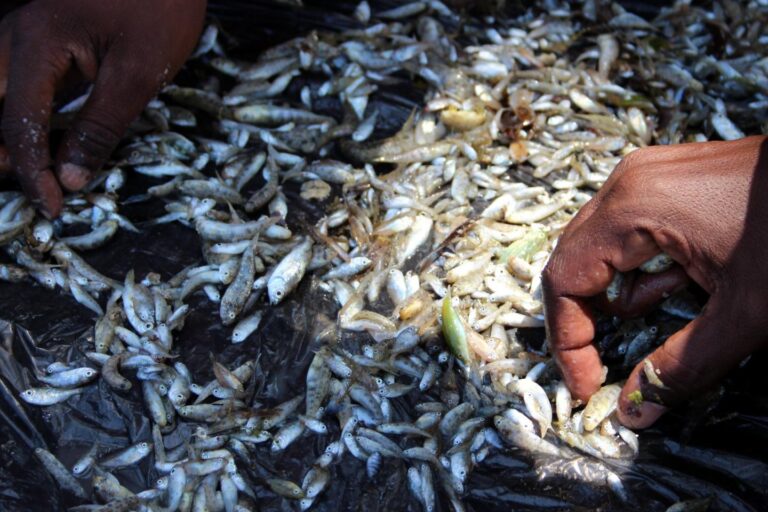
  At least 7.3m tons of fish (usually dead or dying) are thought to be discarded each year from marine fisheries around the world. But these estimates come mostly from observations of large-scale industrial fisheries. Limited attention has been paid to small-scale fisheries, which are assumed to have low discard rates –

Read More »

A Symphony For Scottish Seagrass

Hello Team Seagrass! I am Rufus, a volunteer with Project Seagrass and a marine biology graduate from the University of St Andrews. Since graduating in June 2017, I have begun working for the Scottish Chamber Orchestra’s Connect team and the University of St Andrews’ Music Centre. In this split position, I get to enjoy

Read More »

2018 – From Wales to the World.

Happy New Year Team Seagrass! I can’t believe it’s 2018 already, and I’m sure that is a sentiment we all share! 2017 was an unbelievable year for all kinds of reasons, yet despite the crazy world we now seem to live in, for a few of us it has been

Read More »
A screenshot of the research paper "New directions for Indigenous and local knowledge research and application in fisheries science: Lessons from a systematic review" overlain on an image of seagrass in North Wales
new science

Indigenous and Local Knowledge in Fisheries Science

Seagrass meadows play a critical role in keeping our oceans healthy and stocked with food, providing valuable nursery habitat to over 1/5th of the world’s largest 25 fisheries. Seagrass meadows are also important to small-scale fisheries, particularly as a place to find and collect a reliable source of food with some

Read More »

Coastal Communities Network Gathering 2024

Earlier this month Project Seagrass’ Senior Conservation Officer Katy Waring attended the yearly gathering for coastal communities from the Coastal Communities Network  facilitated by Fauna and Flora International. The event was held on the island of Millport at their field studies centre.   The 3-day event was inspiring; groups from around

Read More »
From left to right: View of the STARESO harbor entrance with Posidonia meadow islands and an accumulation of dead leaves. Close-up of litter accumulation. Experimental benthic incubation device ('bell') installed on accumulations of Posidonia dead leaves (10 m deep). Credit: G.Lepoint & W. Champenois / ULiège
new science

Dead leaves in sea break down into a compost that produces oxygen

Researchers from the University of Liège (BE) studied the fate of the material produced by Posidonia seagrass meadows. This study, carried out in the Mediterranean Sea at STARESO, shows that the dead leaves of what is commonly known as Neptune grass accumulate in shallow areas, where they break down like

Read More »
Seagrass in Orkney

Climate Impact Partners and Deloitte Join Forces to Unlock Large-Scale Seagrass Recovery Financing

Climate Impact Partners and Deloitte, in collaboration with Project Seagrass and the UK’s National Oceanography Centre, announce a groundbreaking program to fund UK seagrass recovery and unlock long-term finance to save and reinstate vital seagrass meadows. The program will fund critical research across UK seagrass meadows, mapping the ecosystems and developing methods to restore them

Read More »
Neil is standing on board Project Seagrass' boat Gwen. He is wearing a hat, sunglasses, and a red coat.
Volunteer

Seagrass Ocean Rescue Volunteer Profile: Neil

The Seagrass Ocean Rescue North Wales programme relies on the commitment and enthusiasm of local volunteers. We spoke to regular volunteer Neil about his experiences of volunteering as part of the programme. Volunteer Interview Tell us a little bit about yourself: I grew up in North Wales, then moved around

Read More »