NEWS

NEWS

Keeping you up to date with Project Seagrass news and views with a mixture of field notes and commentary on seagrass and marine conservation topics.

It’s an ill bird that fouls its own nest

Nearly 30,000 tonnes of sewage containing human waste is to enter the UK despite potential problems for human health. Yet, what stinks for me is that sewage and livestock waste are driving seagrass loss across the UK – we already have a problem, and we don’t need to exacerbate this.

Read More »

Who knew saving the planet could be so peaceful?

Like many of you, WWF staff have been working from spare rooms, kitchen tables and the occasional garden patio for the past few months. When a call came to join our partners at Project Seagrass and Swansea University on a seagrass seed collection trip to North Wales, it was a

Read More »

Two Aquarists went to Wales

Elise and myself look after all the native marine species at The Deep, an aquarium in Hull. I’m very new to all things native having previously worked with penguins and tropical fish but Elise is a pro, thankfully accepting me as her apprentice. We first heard about the work of

Read More »

From studies to seagrass

Mike, Sam, Sam and Owen all started out as students with a love for the ocean on their doorsteps, over the summer they became ‘underwater gardeners’ and joined the Seagrass Ocean Rescue team from the collection of almost a million seeds through to planting 1.5 hectares of seagrass in Dale,

Read More »

Project Seagrass at Awel y Mor Primary

We were extremely excited to build up a relationship with Project Seagrass. Being asked to take part has enabled us to develop our skills and knowledge as staff to help progress with our own school project ‘AYM Project Plastic’. The children have absolutely loved this experience! They have gained lots

Read More »

Marine biology and me

It wasn’t a natural calling. It wasn’t a passion from birth. I was always going to be a baker until I was going to be a nurse, a psychologist, a social worker, a midwife, a nutritionist, a mathematician, etc, etc. So where did marine biology come in? Donning three wetsuits

Read More »

One man went to sow

Guest blog by Mike Furness about his experience as a volunteer during seagrass planting week. It was smelly; it was noisy; it was heavy; it was cold. It was buzzing, vibrant and invigorating. Overwhelmingly it was about camaraderie, enthusiasm and shared purpose, and all set on the beautiful Pembrokeshire coast.

Read More »

New life and new hope

Ah, the long awaited bank holiday weekend is almost here, but this time the circumstances are more than a little unusual. Instead of heading to the beach we will be staying at home, not just to look after ourselves but to support our NHS and it’s amazing staff. Easter is

Read More »

The Isolated Conservationist

You are not alone! We are all having to take a pause from our chaotic lives in the midst of the COVID-19 pandemic. We must support our health care services and the incredible frontline workers by staying at home. Our ocean optimism and motivation to protect our planet does not stop for

Read More »
biodiversity

Starting the Seagrass and Dugong fightback

  The Dugong (Dugong dugon) is IUCN Red listed as Vulnerable, in many of the 46 range states that contain Dugong its status is a lot worse. Historic hunting, loss of its seagrass habitat and the impacts of by-catch have been the primary causes of its decline. Back in 2007 the

Read More »
conference

Registration for the 12th International Seagrass Biology Workshop is Now Open!

The International Seagrass Biology Workshop (ISBW) is the only international meeting specifically tailored to seagrass scientists, professionals and students. Abstract submissions are now open as are proposals for workshops. All payment is via PayPal using credit/debit cards. There is one registration fee. It covers access to all parts of the conference program, including the

Read More »
biodiversity

Learning to protect seagrass in the heart of the Coral triangle.

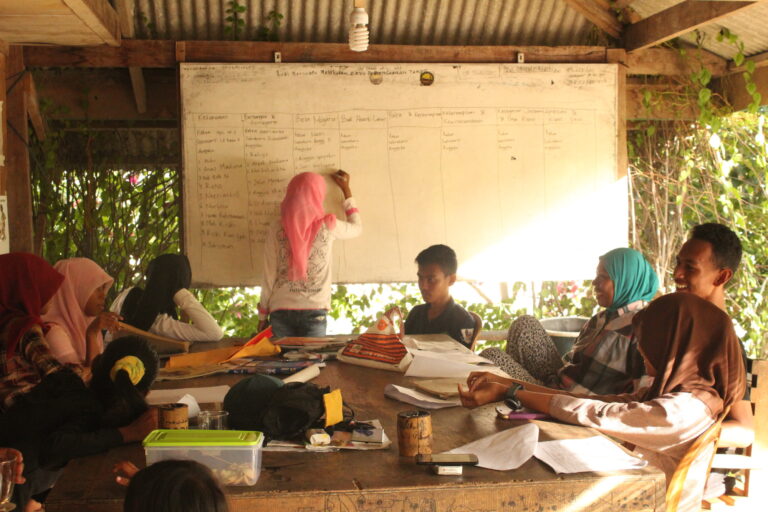
  Indonesia is at the heart of the Coral Triangle, an area characterised by having the World’s highest marine biodiversity. With over 17000 islands, 51,00km2 of coral reef and at least 30000 km2 of seagrass its marine life is extensive and spectacular. But with a growing population, rapidly expanding GDP,

Read More »
biodiversity

Puttalam Lagoon – Paradise Lost?

At the end of August I spent 10 days conducting fieldwork in Pattalam Lagoon, which is situated in the north west of Sri Lanka. The purpose of my visit to Puttalam Lagoon was to set up socio-economic and fish landings surveys with a research collaborator, who will now complete the

Read More »