NEWS

NEWS

Keeping you up to date with Project Seagrass news and views with a mixture of field notes and commentary on seagrass and marine conservation topics.

Coldplay Ticket Competition, Photo Credit Anna Lee

And the winners are… Coldplay Competition winners announced

Earlier this year, Project Seagrass launched a creative competition in collaboration with our official patrons, Coldplay. The competition invited entrants to submit inspiring, impactful, and creative designs communicating one of the following five themes: 1. The importance of seagrass 2. Seagrass and people 3. Seagrass around the world 4. Seagrass

Read More »
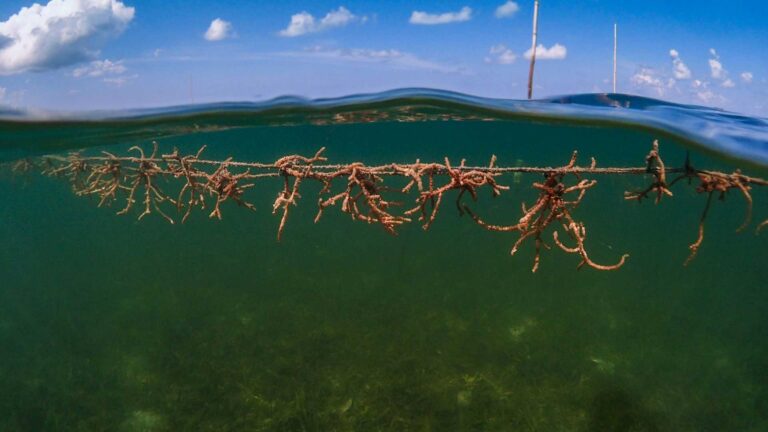
Seaweed being grown along a line.

Expanding seaweed farms pose a risk to vital marine life

Seaweed farming is a rapidly expanding global industry. As a food resource, it has high nutritional value and doesn’t need fertilisers to grow. Seaweed provides valuable habitats for marine life, takes up carbon and absorbs nutrients, plus it helps protect our coastlines from erosion. Usually, seaweeds grow on hard, rocky surfaces. Yet, to

Read More »
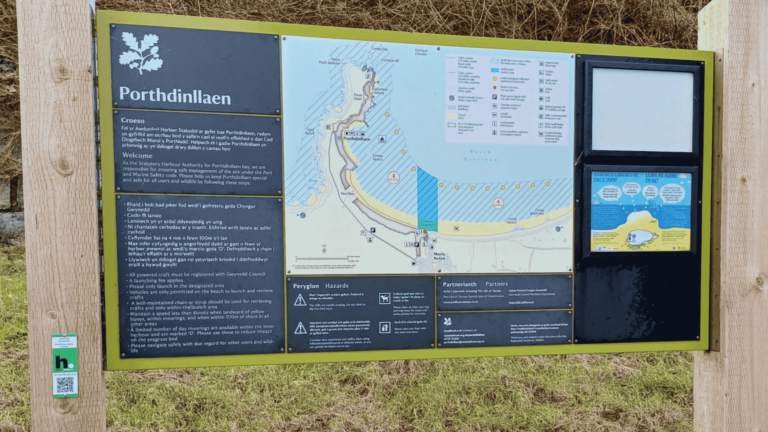
An information board with information about Porthdinllaen in North Wales. On the left hand pillar of the board is a QR code where users can scan to receive further information about the seagrass meadow in Porthdinllaen.

QR code on Wales Coast Path reveals the story of seagrass

A new QR code on the Wales Coast Path at Porthdinllaen and Morfa Nefyn reveals the story of the large seagrass meadow in the shallow water. Thousands of people visit this area every year to enjoy its natural beauty, but few are probably aware of the seagrass meadow – estimated

Read More »
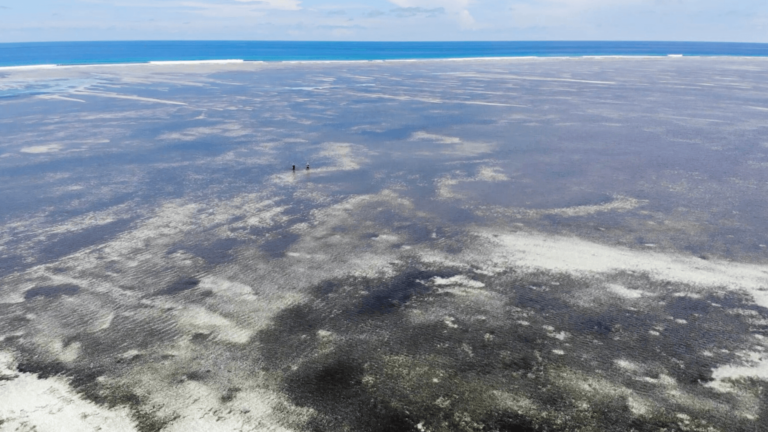
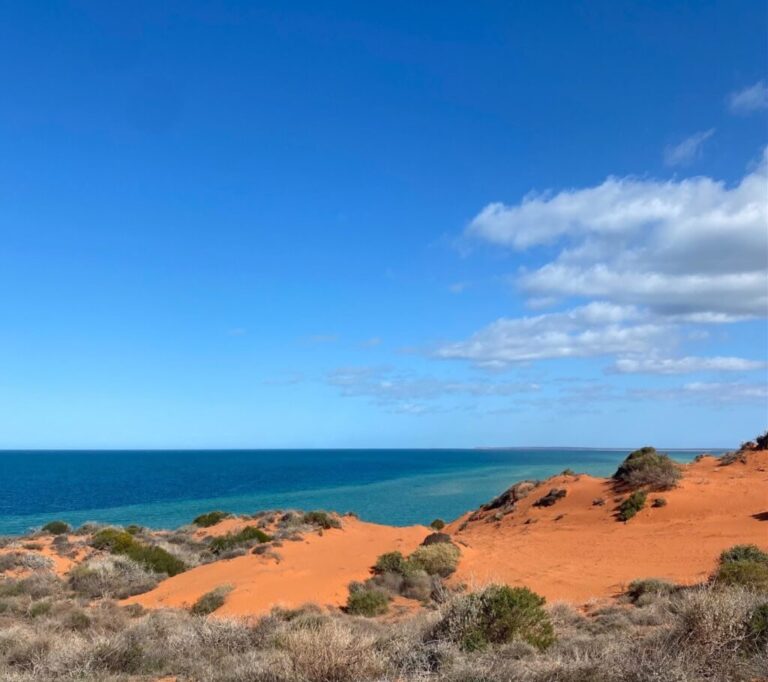
Gathaagudu is an area of natural beauty. Credit: Cat Williams

Partnership is key to restoring shark bay seagrass

Gathaagudu/Shark Bay is located on Malgana (pronounced Mal-guh-nuh) Country. It’s a place of great natural beauty and a UNESCO World Heritage Site. The landscape is a stunning array of colors as the desert meets the ocean. Below the sea’s surface, 4,000 square kilometers of seagrass meadows sway. That’s equivalent to

Read More »
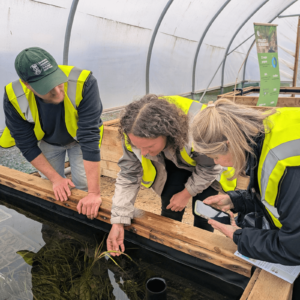
A member of Project Seagrass staff and two members of the community are leaning over one of the ponds inside the polytunnel. One member of the community is holding a strand of seagrass to look at a flower.

Project Seagrass hosts Seagrass Nursery Open Days

On the 9th and 10th of July Project Seagrass welcomed local organisations and members of the community to our Seagrass Nursery in West Wales as part of a series of Open Days.  On the 9th July representatives from Pembrokeshire Council, Carmarthenshire Council, Pembrokeshire Coastal Forum, Rebel Energy, SeaLife, Bodorgan Estate,

Read More »
An illustration of seagrass with the text "Seagrass Information Posters" overlayed

Multi-lingual seagrass information posters launched

Seagrass meadows provide a range of environmental, economic, and social benefits to people and planet. They provide habitat, food, and shelter to thousands of species of fish, invertebrates, mammals, reptiles, and birds. Through their diverse use as fishing grounds, they support the creation of jobs and provide access to food sources

Read More »
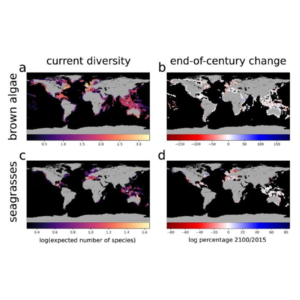
Four graphs outlining the present distribution and projected end-of-century changes in global macrophyte species diversity.
new science

Study projects loss of brown macroalgae and seagrasses

Researchers predict that climate change will drive a substantial redistribution of brown seaweeds and seagrasses at the global scale. The projected changes are alarming due to the fundamental role of seaweeds and seagrasses in coastal ecosystems, and provide evidence of the pervasive impacts of climate change on marine life. In

Read More »

Project Update: Restoration Forth | June 2024

Restoration Forth aims to restore seagrass meadows and native oysters into the Firth of Forth, to create a healthier coastline for people and nature.   Find out more about the project here.  Orkney seagrass trip Next month the seagrass team will be departing for their annual seed collection trip in Orkney. Following

Read More »
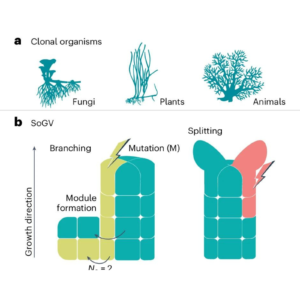
new science

Seagrass clone in the Baltic sea is more than 1,400 years old

Using a novel genetic clock, a team of researchers from Kiel, London, Oldenburg, and Davis, California, has determined the age of a large marine plant clone for the first time. This seagrass clone from the Baltic Sea dates back to the migration period 1,400 years ago. The newly developed clock

Read More »