A New Dawn For Scottish Seagrass
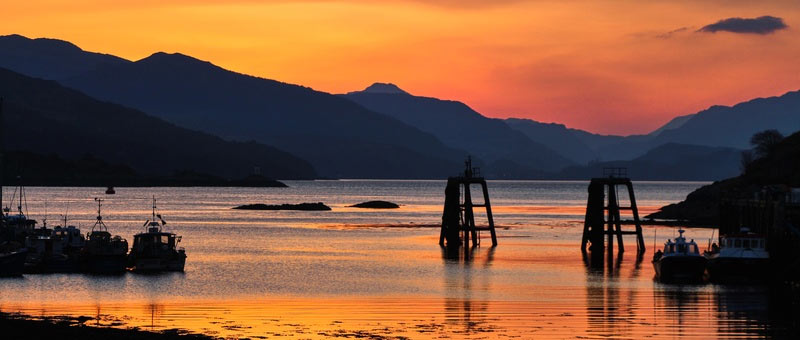
Seagrasses grow all around the coast of the UK and around our islands within the intertidal zone. Scotland plays host to the highest abundance of seagrass when compared to the rest of UK, this is due to the better water quality and also a higher number of available sheltered sites around the coast of Scotland. Two species of Zostera can be found around our coastline: Zostera marina and Zostera noltii. Before the 1930’s both species thrived and were abundant, however a wasting disease outbreak in the 1930’s decimated the populations of much of Scottish Zostera and the population is still recovering today. The maps below shows the recorded abundance and distribution of Zostera around Scotland, the green boxes indicate records of seagrass (distribution maps obtained from NBN). The first map shows the extent of protected areas (both terrestrial and marine) around Scotland, the second the recorded abundance and distribution of Zostera species. The green boxes indicate records of seagrass (distribution maps obtained from NBN). The seagrass meadows of Scotland play a very important role in the biological diversity of Scottish coasts. Zostera meadows are very important for providing a habitat to juvenile and adult fish some of which are key fisheries species, as well as providing essential grazing for Brent and Canada geese and Mute and Whooper Swans. Seagrass is especially important for over-wintering grazers who need easy access to forage. For these reasons it is essential that certain (if not all areas) of seagrass be protected and so we are encouraging the government to extend current protection and provide additional protection to seagrass areas around the UK. The most common locations for abundant seagrass around Scotland are: on the East Coast; the Firth of Forth, Tay estuary and the Moray Firth, on the West coast; in a number of lochs in the Highland region, the Sound of Mull, around the Isle of Arran, Argyll and Bute and Dumfries and Galloway. Some unrecorded seagrass has been found within Gruinard Bay, Gairloch in the North West Highlands only a couple weeks ago. It has been estimated that Scotland plays host to around 20% of Zostera in North-western Europe and for all we know there is so much more still to be discovered around the Scottish coastline! Due to the topographical nature of the Scottish West coast we are convinced there should be a lot more seagrass than is currently recorded, and this is where YOU, the public can play your part. You can help by Project Seagrass by recording any sightings of seagrass to Seagrass Spotter our online database and app (app available from Google Store) so we can build up a map of the distribution of seagrass. We’re hoping that we can get the Scottish public involved in Seagrass Spotter and in performing Seagrass-Watch surveys to discover as many areas of seagrass around our coast as possible. Try our new recording app and website Seagrass Spotter Much of the seagrass around Scotland is protected by our territorial water MPA’s. There are 16 existing protection sites that are thought to be providing adequate protection to seagrass areas, a further 32 sites could have the potential to extend this protection if they were supplemented by MPA’s. These protected areas only cover a small area of seagrass, if further MPA’s were named or extended then the protection of Scottish seagrass would be much improved, with the majority of UK seagrass being found in Scotland it is vital that our seagrass is protected. Most recently the Wester Ross Biosphere area was created which protects a large area within the North-West Highlands. Research of Seagrass has been quite limited in Scotland, with the most extensive research being carried out on mapping techniques, the Tay estuary has had quite a lot of distribution and abundance monitoring as well as the North west coast. Due to this I think it is essential that Scottish seagrass be monitored more regularly and across a wider area. My aim with Project Seagrass is to raise the awareness and understanding about Seagrass around Scotland and get the public involved in SeagrassWatch. Over the summer we will be performing some public and educational outreach in and around Glasgow by showing a presence at the Glasgow Science Festival Science on Sunday 19th June 2016, if you’re around then please come along! (Click here for more information about Glasgow Science Festival). The ideal future will involve setting up some field trips to areas around Glasgow and further afield where we believe seagrass to be present and showing people how to carry out Seagrass Watch and educating the Scottish public about the importance and threats to seagrass. Hopefully with time this will increase to lots of cities, towns and villages across Scotland in order to show the public how to carry out Seagrass Watch and increase the public knowledge and awareness about UK seagrass, as well as getting some more widespread educational outreach started. We’lll keep you up to date with our progress and news of any Scottish events and findings.
Intern Spotlight: Lauren Clayton
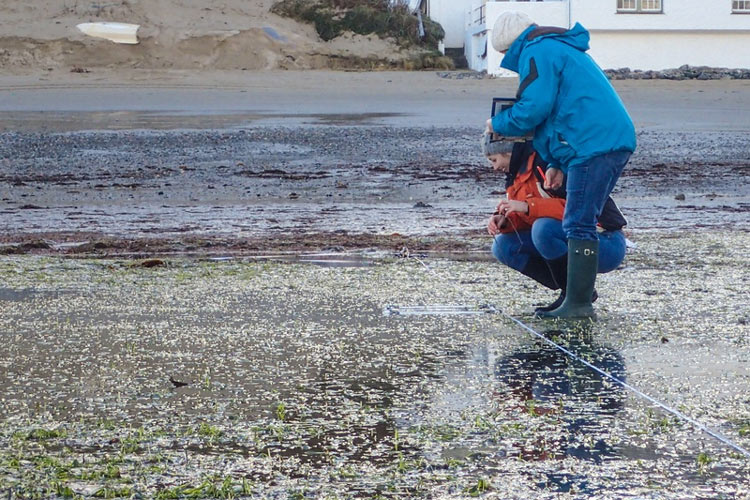
As a Marine Biology student at the University of Glasgow, Scotland, I was lucky enough to be accepted on to a Maters Work Placement. This course allows a few selected students to take a year between the 3rd and 4th year of their degree to experience working for an organisation while also performing research. At the end of the placement I continue back into my final honours year and I will then graduate with a masters. I am currently working with Project Seagrass as an intern for my placement and will be working with them in this capacity until the summer. My current work involves conducting a meta-analysis of fish assemblages in seagrass habitats around the world. This involves searching for research papers that contain any data about fish species that have been observed in seagrass beds and then adding this data to our own database. I have been organising this database in order to make it easy to navigate and interpret and I have also been verifying the data that has already been entered. I am now onto the stage of searching for any papers that have been missed or published after the original searches were made so that we can ensure that all the possible work with the data we want have been found and collated in our database. This way when we are finished we can say that the fish species mentioned in our database are found in seagrass habitats in certain locations with absolute certainty. In addition to this, I’m also working on a project that involves analysing videos that have been filmed in Indonesian seagrass beds. Baited Remote Underwater Video systems, or BRUV’s, are camera systems that are left underwater, to attract fish with the use of bait. Analysing this footage is a tiresome task, especially with each video lasting 30 minutes. Analysis of this is done using special software which allows you to tag and count individual fish species in each frame – again very time consuming. This gives us the MaxN. The MaxN is the maximum number of one species of fish in a frame of the video at a given time. This isn’t the most exciting work and I tend to find myself daydreaming that I am scuba diving in Indonesia while watching certain stretches of video – many with very little fish. A fish investigates the bait As part of my internship I’ve also had the opportunity to conduct my own research. Once written up this will then contribute to my degree, and once complete will help secure my masters. For this project I am using the videos collected in Indonesia and analysing them in a similar way to determine if there are fish species or assemblages that show habitat specificity towards certain seagrass species, or seagrass beds cover. I am hoping to see some sort of connection with this by only time will tell. Some videos lacked any fish Back in Feburary I conducted my first SeagrassWatch exercise in Porthdinllaen, Wales – I can spell this place, but can’t pronounce it! It was a nice opportunity to get out of the office for a few days and experience some field work, even if it did mean getting up ridiculously early and getting very cold and wet. As part of the trip we also performed some educational outreach with a primary school from the area. They learnt about seagrass and its importance and they also learnt about what lives in the seagrass and had a fantastic and fun day out at the beach – sand animal building was a requirement of course! I was even trusted to have a go with the Drone, which was also great fun! Drone flying! In addition to everything else, I’m also researching Scottish seagrass during my internship, in an attempt to map out its rough distribution so that I can find some good spots in Scotland to start my own SeagrassWatch monitoring, expanding the range of Project Seagrass sites to include Scotland. We’re going to be involved with the Glasgow Science festival and will hopefully put on some events over the summer around Glasgow.
Don’t let the UK become a fish out of water: For the sake of our seas let’s stay in the EU
Our oceans and coastal resources have never been more important or under greater threat. Marine biodiversity has rapidly declined in the last 40 years, so much so, that marine populations have almost halved during this time. The very marine habitats and biodiversity that help ensure we have food to eat and oxygen to breath are being degraded the world over. At the same time, marine litter is on the rise, and issues such as climate change place an increasing level of pressure on the ability of our oceans to remain productive. In the UK the marine environment provides enormous prosperity and jobs, this amounts to a GVA of £38.5 bn and upwards of 290k jobs. At Project Seagrass we know all too well the value of our marine environment and the threats facing seagrass meadows, not just here in the UK, but across Europe and indeed across the entire planet. We exist to communicate the importance of these productive systems, and work to protect these ecosystems so they can remain productive in perpetuity. Although there is a lot to be worried about in our oceans and coastal seas there is also a lot to be optimistic about, especially in Europe. The European Union’s marine territory is the largest in the world, covering 20 million square kilometres of water – nearly five times the size of its land area. By working together, countries in the EU are making progress that is beginning to halt and reverse the trends of marine habitat loss, marine plastics, pollution, overfishing, and biodiversity loss. There are a lot of problems and a lot left to fix but the EU is a driving force behind positive action. In 1992 the EU adopted the Habitats Directive, which aims to protect vulnerable natural habitats and species (including seagrass), together with the Birds Directive, which has been creating Special Protection Areas (SPAs) since 1979, it remains at the very core of EU nature conservation efforts. These are key examples of how the EU is helping our oceans and has resulted in an expansive range of Special Areas of Conservation (SACs) around the UK coast. Many of these SACs contain extensive seagrass meadows. We’ve also had the Water Framework Directive, the Marine Strategy Framework Directive (MSFD) and the Bathing Water Directive that have all contributed to improving the health of our coastal seas from centuries of degradation. The MSDF is now a major EU force pushing for better Marine Protected Area coverage, Good Environmental Status (GES) and spatial planning of our coastal seas. The EU is also working to increase sustainability of our fisheries and to push the international community to undertake improved governance of the World’s Oceans. Since EU policy was reformed in 2002, the health of many fish stocks has improved. Indeed, by 2011 the majority of assessed fisheries were considered to be sustainably fished. Even the infamous North Sea Atlantic Cod, long the “poster child” of overfishing in our waters, is benefiting not just from the protection of our seagrass meadows (an important juvenile habitat), but from sustainable fishing measures. Scientists are optimistic that given its current rate of recovery the stock could be certified as sustainable as soon as next year. Without this array of EU legislation the UK government would likely have done very little for our coastal seas. In fact the UK government has repeatedly stalled on action over the years and had to be prosecuted by the EU on a number of occasions in order to take the necessary action for a clean environment. Often the only action the UK government does take to help is dependent upon EU resources such as the EU life programme. When the media and politicians discuss ‘EU Red Tape’ they often refer to the very legislation that is helping to protect our environment, keep us safe and ensure people’s rights. This is not a hindrance it’s a help. We should also not underestimate the contribution that the UK academic community has made to marine conservation and management. This is a sector of the UK economy that is heavily dependent upon EU wide collaborative funding and knowledge exchange. Science doesn’t happen in the UK alone, scientific progress is based on the scientific community learning and progressing together. Such progress ultimately has benefits for how we learn to sustainably manage and exploit the resources that our oceans provide. Remaining in the UK will help push forward the science needed to conserve our oceans for future generations. The seas around the UK need to be part of Europe. The so called ‘Brexit’ would be a catastrophe for our coastal seas, and put these marine resources that are so critical for our long-term future in jeopardy. Our oceans in Europe need a united EU, with the UK as a leading partner in governing these critically important resources. At Project Seagrass we believe that continued UK membership of the EU is vital for the protection of our oceans, coastal seas and specifically our seagrass meadows into the future. At Project Seagrass we recognise that the EU isn’t perfect but we also understand that we have to be very careful what we wish for in terms of the impact leaving the EU would have on our oceans and coastal seas. It’s evident that UK politics has a tendency to be short term and we’re constantly reminded that the natural environment is seen as an impediment to economic growth. EU agreements help mitigate this by encouraging the UK government to be more long term in policy, protecting our environments not just for us, but for future generations to come. We’re voting not just for our oceans, but our children’s, and grandchildren’s oceans. At Project Seagrass we believe that voting to stay in the EU is a vote to sustain our environment, including our seas. Download this statement here.
Where is all the seagrass? Project Seagrass wants you to help!
Help us record the seagrass near you At Project Seagrass we created a conservation tool that could lead to new discoveries about one of the ocean’s most underappreciated habitats — seagrass. With our new phone app and website, Seagrass Spotter, ocean enthusiasts around the British Isles can become citizen scientists who contribute to marine conservation, with just a few taps of their phone. We’ve made important scientific breakthroughs with seagrass in recent years, but they remain incredibly threatened and are still underappreciated in our British Isles. Seagrass remains threatened and under appreaciated in our British Isles The Problem Seagrass meadows in the British Isles have recently been highlighted for their value as fish nurseries for commercially important species (e.g. Pollack, Herring Atlantic Cod, Plaice), this adds to our existing knowledge of their high ecosystem service value throughout Europe. Despite their importance seagrass meadows are in a degraded and perilous state in the British Isles having experienced significant losses over time. Estimates suggest that between 25% and 80% of UK seagrass has been lost since the 1930s with minimal signs of recovery. Significant threats in the British Isles include direct physical damage (e.g. from boating or trampling), increased sedimentation and poor water quality. Confounding the problem is a lack of public awareness of the existence and value of seagrass meadows. Seagrass Spotter With Seagrass Spotter, we want to map and record more of the seagrass here in the British Isles to be able to help protect it for future generations. Seagrass Spotter seeks to expand the number of people studying seagrass from a handful of scientists to hundreds and potentially thousands of ‘citizen scientists.’ As part of efforts to build a sustainable monitoring network, and by leveraging the enthusiasm of everyone from fishers to SCUBA divers and from wildlife enthusiasts to tourists, we’ll create a more comprehensive picture of seagrass meadows around our British Isles. To protect our critically important seagrass meadows we need to first know where they are, understand their importance, and know the things that might damage them. Whilst the British Isles has a proud history of biological recording, seagrasses have rarely figured in that data collection. We want to change that. When we don’t know where seagrasses are, then these habitats that provide so many important functions to our coastal seas can disappear without anyone even noticing. Studying seagrass is challenging. It requires time, energy, funding and experts willing to conduct research. Governments, Universities, NGO’s all try and do this vital mapping work but it’s too expensive and time consuming, especially in an era of austerity. Relying on data only gathered by experts leaves a huge deficit in our information and this is where citizen scientists come in; observations made by members of the public can help bridge the gap in our knowledge, as in many areas of the British Isles basic distribution information is still badly needed. The idea is simple and we’re inviting the public to upload photos of seagrass from known locations around the British Isles using either the phone app or directly on the website. Together with submitting photos we’re also asking contributors to answer some simple questions about the seagrass at the site. However, we don’t expect contributors to have prior knowledge of marine biology and the website and app will provide all the information you may need. The phone app is available from Google Play (iPhone version to be released early May) and the website is accessible through any format. Please take a look at www.seagrassspotter.org for more details or to download the app search ‘Seagrass Spotter’ in Google Play or follow this link here. This application is currently only applicable for use in the geographic area of the British Isles but we’re currently looking to find sponsorship to turn this tool into a global resource.
Project Seagrass Launch – Thank You
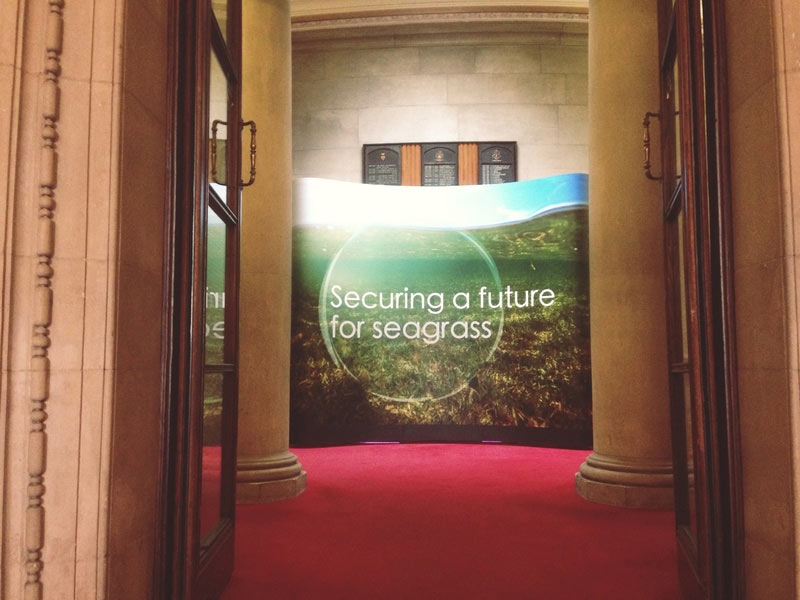
Yesterday evening, we hosted our official Project Seagrass launch event and its safe to say it was a blast. We were excited and thrilled to see so many faces, some old and some new – we couldn’t be sure how many of you would make it despite the RSVP! Back in 2012, as merely a seed (excuse the pun) in the minds of Benjamin Jones and Richard Lilley, the duo had no idea that this seed would develop into the fruiting body that is, Project Seagrass. With guidance from Richard Unsworth and later on, Leanne Cullen Unsworth, Project Seagrass embarked on a journey to develop a unique marine conservation charity, a proudly Welsh entity, with a global vision to make an impact on marine conservation. BBC’s Dr Rhys Jones officially launched the evening giving insights into where he first came across seagrass and how amazed he was by it (Photo: Josephine Wilde) The Project Seagrass journey, like seagrass itself, seems to have developed with a life of its own, slowly expanding its root system ensuring that its gone from strength to strength. The launch last night couldn’t have been possible without the partners that we’ve rooted ourselves with. Swansea University, and particularly SEACAMS, has been integral to our achievements to date, as has Cardiff Universities Sustainable Places Research Institute, whom without, last night would not have been possible. It also couldn’t have been possible without you. Without your support we would not be where we are today! We were genuinely moved to see so many of you taking an interest in Project Seagrass and caring so deeply about what we do. To those that came, we hope you enjoyed the experience, and that the crowd we managed to gather was a special mix of interesting people. We now have a chance of winning some much needed funding to continue our work and we’d be delighted to have your support once more. www.thepeoplesprojects.org.uk/projects/view/mission-sea-inspiring-children-to-protect-our-sea The Project Seagrass quiz gave people a chance to really think about some of the services thats seagrass provide, and why theyre important (Photo: Josephine Wilde) The evening was a chance to let people learn about some of our projects, like the newly released SeagrassSpotter app (Photo: Josephine Wilde) An array of resouces were available to look at, including our seagrass colouring book, a vital part of our SEA Programme (Photo: Josephine Wilde) It was a chance for people to learn (Photo: Josephine Wilde) Project Seagrass Director, Richard Unsworth, chatting to guests about our work (Photo: Josephine Wilde)
CERF 2015 – Grand Challenges in Coastal and Estuarine Science
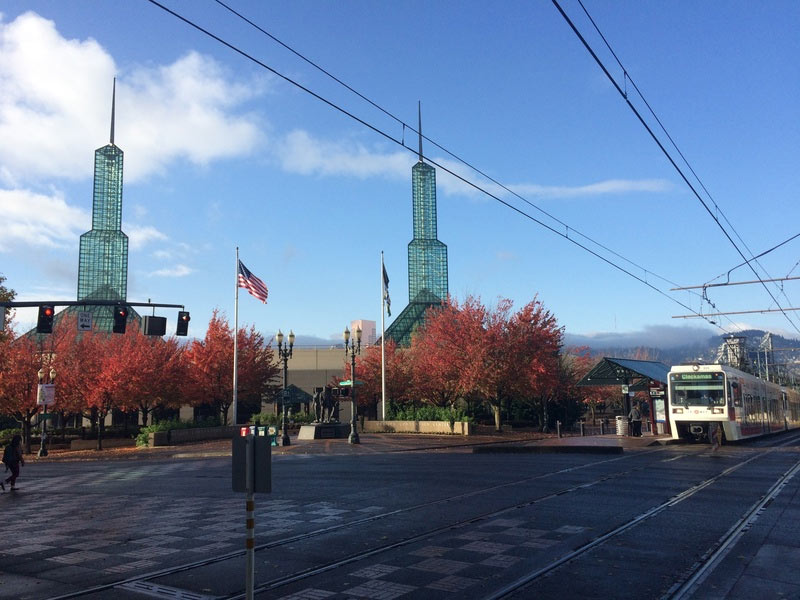
A long-standing tradition of Coastal and Estuarine Research Federation (CERF) conferences is the friendly and collegial environment and the unwavering support for early career scientists. This #CERF2015 was no exception with a multitude of leading marine scientists inspiring the next generation with #OceanOptimism as together we tackle the Grand Challenges together. This was despite a brilliant opening keynote by Berth Kerttula, Director of the National Ocean Council. ‘The Good, The Bad and The Ugly’ of marine problems! #CERF2015 was very active on social media, check out the hashtag To give you a quick history lesson, CERF conferences have been held biennially since 1971 with the aim of: ”…advancing human understanding and appreciation of the Earth’s estuaries and coasts, to the wise use and management of these environments and to making the results of their research and management actions available to their colleagues and to the public.” Such admirable ambitions are inline with our own at Project Seagrass and so CERF conferences are natural home for promoting our vision: “Our vision is that our marine ecosystems are healthy, well-managed and full of life.” At this conference a whole range of topics pertaining to seagrass meadows were discussed. Seagrass restoration techniques were presented by Per-Olav Moksnes, Louise Eriander and Eduardo Infantes of Göteborg University in Sweden, whilst Rohani Ambo-Rappe showcased us transplantation methods for seagrass restoration in the Indo-Pacific. Michael Rasheed from James Cook University, Australia was able to report on the protection of the Great Barrier Reef seagrasses. He presented work on innovative monitoring of seagrasses at high risk from coastal development. Similarly Len McKenzie (also of JCU) was able to report on the status of seagrass meadows adjacent to the highly urbanized city-state of Singapore. One of the most inspiring research projects to be discussed at CERF2015 must surely be the work of the Zostera Experimental Network (ZEN). Pamela Reynolds provided a summary of research into the biodiversity and complexity of seagrass functioning across the northern hemisphere. Such collaborative research is surely cause for #OceanOptimism!# There were some fantastic posters at the conference documenting a range of seagrass research topics. Yet it wasn’t just the established names who were doing exceptional seagrass research. There were over 700 students and early-career scientists at the conference who had produced some fantastic research and were contributing significantly to our global knowledge base. Not least Erin Voigt won best student talk #CERF2015 for her work on the effect of structural complexity and biodiversity on seagrass ecosystem function. To all those involved in the hosting of the conference – thank you, and to all those who are conducting seagrass research – thank you! Keep up the good work and see you at ISBW2016. #TeamSeagrass
Starting the Seagrass and Dugong fightback
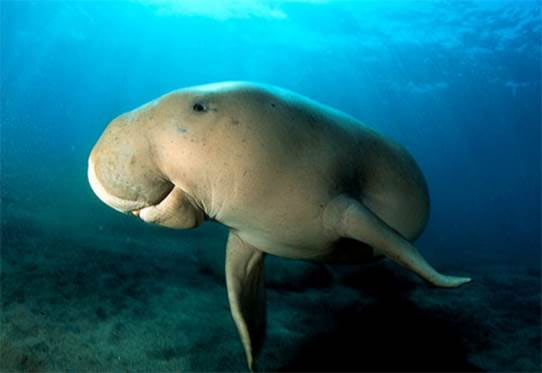
The Dugong (Dugong dugon) is IUCN Red listed as Vulnerable, in many of the 46 range states that contain Dugong its status is a lot worse. Historic hunting, loss of its seagrass habitat and the impacts of by-catch have been the primary causes of its decline. Back in 2007 the Secretariat of the Convention on Migratory Species (to which Dugong is one) negotiated the signing of a Memorandum of Understanding on the Conservation and Management of Dugongs and their Habitats throughout their Range (Dugong MoU) between 7 of these 46 countries. The aim of which was to promote internationally coordinated actions to ensure the long-term survival of dugongs and their seagrass habitats throughout their extensive range. Since 2007, the Secretariat of the Convention on Migratory Species (CMS) has managed to persuade a total of 26 states to sign up to this MoU and hopes to expand this further with the intention of protecting this wonderful species and its important seagrass habitat. A major spin off from this MoU has been the development of a Global Environment Facility funded project that aims to support the implementation of this MoU by 8 of the 26 signatories. Over the few months I’ve been lucky enough to become part of this project, principally as a technical advisor on the ecosystem services of seagrass meadows and as a result attended the recent inception workshop in Colombo, Sri Lanka. Back in October, along with partners from Mozambique, Vanuatu, Madagascar, Sri Lanka, Indonesia, Soloman Islands, Temor Leste, and Malaysia I attended a workshop to discuss how local partners could develop projects aimed at promoting the conservation of seagrass and dugong. This workshop brought together a range of technical experts from the fields of dugong biology and conservation, seagrass monitoring and assessment, and applied conservation decision making. By enabling partners to critically consider the focus and methods of their respective projects, the aim of the workshop was to ensure that the investment of the Global Environment Facility has the greatest potential conservation impact. A nice example of this was how partners were provided with information and tools to consider (and reconsider) the most appropriate methods for mapping seagrass in their locations (see the Remote Sensing Online Tool Kit). Online toolkit for remote sensing of Seagrass It was great to discuss seagrass ecosystem services with partners from around the region, many of which are dealing with the same research questions and considerations that the work of Project Seagrass and SERG are currently investigating. In the Solomon Islands it was felt that local communities might not respond to conservation measures to protect Dugong, but that they would respond to measures aimed at protecting the habitat of the key local Rabbitfish fishery (seagrass) and indirectly help the Dugong. In Madagascar much the same issues were present, but the knowledge of the seagrass resources and their associated Dugong was at a very low level and needed to be improved. The Indo-Pacific seagrass species Halophila ovalis is a key food source for the Dugong, its soft energy rich roots and rhizomes are targeted above many alternative seagrass species. This project that is being managed through and co funded by the Mohamed bin Zayed Species Conservation Fund appears a once in a generation opportunity to start a fight back for Dugong and Seagrass in a region where ecological decline is so widespread. I sincerely hope that this project expands and becomes a wider success in order to inspire more countries to become involved and for more countries to sign the MoU.
Registration for the 12th International Seagrass Biology Workshop is Now Open!
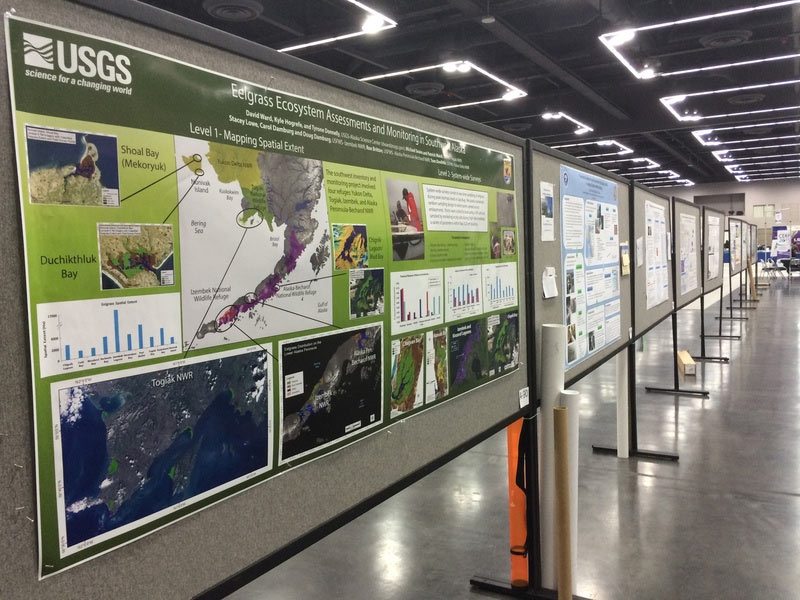
The International Seagrass Biology Workshop (ISBW) is the only international meeting specifically tailored to seagrass scientists, professionals and students. Abstract submissions are now open as are proposals for workshops. All payment is via PayPal using credit/debit cards. There is one registration fee. It covers access to all parts of the conference program, including the following: Shuttle bus from Bangor (on Sunday 16th Oct and Monday 17th Oct) and return on 21st and 22nd Oct. Welcome event Field trip (excluding option extra activities e.g. diving) Poster event Conference dinner Tea and coffee Additional local trips Onsite Wifi access Accommodation bookings will include all meals (approx. £95 pppn) and need to be paid directly to Nant Gwrtheyrn. See the Accommodation page here. For more information check out the registration page here.
Learning to protect seagrass in the heart of the Coral triangle.
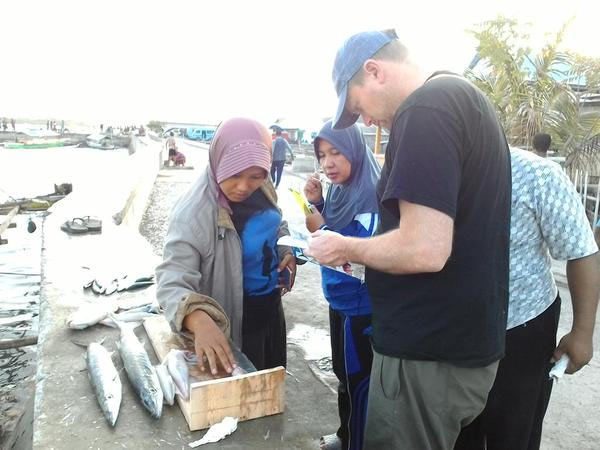
Indonesia is at the heart of the Coral Triangle, an area characterised by having the World’s highest marine biodiversity. With over 17000 islands, 51,00km2 of coral reef and at least 30000 km2 of seagrass its marine life is extensive and spectacular. But with a growing population, rapidly expanding GDP, and its status as the world’s 2nd biggest fisheries producer, the marine ecosystems of Indonesia are under increasing threat. These threats are not just critical for the economy but also for the maintenance of food security of the nation’s 250 million people. This is why we’re working on a project to help find ways to protect some of the nation’s important habitat. Over the last two weeks I’ve been privileged to experience the marine environment of Indonesia. I’ve been setting up the Indonesian node of a SE Asian wide project to examine how seagrass meadows contribute to food security in case study locations, and to determine at these sites how this security is threatened by widespread anthropogenic threats to the habitat. The work is a collaboration between Cardiff University, Swansea University and a series of local partners in Indonesia, Cambodia, Sri Lanka and the Philippines. In Indonesia we have some fantastic collaborators who are helping us run great projects in Selayar and the Wakatobi, two areas of South Sulawesi. Dr Rohani Abbo Rappe, Prof Jamal Jompa and Dr Yayu LaNafie are our partners at Universitas Hasanuddin in Makassar for the work in Selayar. This is where my recent trip focussed its attention. Rohani and Yayu are both seagrass researchers widely experienced in the ecology of Indonesian seagrass meadows and have just completed annual seagrass assessments in Selayar for the CoreMap CTI programme. Research trips to Indonesia seldom start easily, I spent my first few days in the worsening smog of Jakarta arranging a research visa with the help of an old colleague of mine SteveO from my Opwall days. Jakarta is interesting, but it’s crazy, and not my kind of place, I spent two evenings trying to observe the Blood Red Moon, but got thoroughly defeated by the thick smog of Java. Fortunately the visa process was smooth, and the Indonesian research department granted me a Kitas visa quite rapidly. I was then off to Makassar and then onto Selayar to spend time developing our new project with researchers at UNHAS. Selayar is the main island of the Selayar islands archipelago, it is bordered on the west by extensive fringing reefs, mangroves and seagrasses that create an enormous potential fishing area. The east of the island is highly exposed and the sea floor rapidly descends to deep waters. On the western side we met with a great team of research assistants assembled by UNHAS to help run the field work for the project. I was supplied with a host of fabulous local food as we held a series of training sessions teaching team members how to conduct quantitative fisheries landings surveys, run household interviews and lead focus group discussions with community groups. This involved lots of early very mornings heading down to the fish landing docks after the local morning call to prayer. We surveyed a series of lift nets boats, fish fence landings and gill net landings in addition to some line fishing boats and some trap fishers. Although the pelagic fish landings of anchovy caught with large light based lift nets were huge, the landings from the seagrass based fisheries (gill nets, traps and fish fences (sero)) were all poor. Lots of juvenile fish, discards and poor CPUE. Fish landings from the shallow water seagrass fisheries of Selayar were poor. We can only hope that this is a seasonal phenomenon. Our trial interviews started to reveal a coastal seascape under widespread threat and increasing pressure. Many people described declining catches, loss of seagrass, changes in species catch and a general deterioration of the marine environment. The seagrasses of Selayar were formerly the main point of spat collection for the region for extensive Prawns and Milkfish aquaculture, but these are no longer present. We also heard descriptions of the disappearance of otters, formerly seen in seagrass collecting Urchins. Seagrass meadows of Selayar contain up to 11 species and are dominated by Enhalus acoroides and Thalassia hemprichii. It was nice to hear many references to recent dugong sightings but overall I felt that the marine environment of Selayar was in need of help. Our suspicions were confirmed as we set about collecting BRUV data of motile fauna in seagrass up and down the coast. Although we saw a large Barramundi and few large shoals of Rabbitfish, the seagrasses did not contain an abundance of fish, suggesting a system under high exploitation pressure. Looking around the Island of Selayar it’s easy to see the vast expanse of permanent fixed gear fish fences that give fish living in the shallow waters very little chance of survival, particularly the juvenile fish that need to grow and develop to form the next generation of spawning adults. BRUV footage of octopus foraging in seagrass in Selayer, SW Sulawesi, Indonesia It was a great trip to Selayar and I left the Island feeling like we had a good research team ready to collect sound data. I also felt that our project was timely as the seagrasses of Selayar need some assistance. Selayar is an example of a site slowly losing its ecosystem resilience. Our recently published paper on this topic shows how the loss of a diverse food web and the cumulative pressures of localised disturbance and decreasing water quality mean that seagrass is more susceptible to the impacts of climate change. As we see the increasing daily impacts of a very large and intense scale El Nino event across the Indo-pacific region I hope that the seagrasses of the region will survive. Hopefully the results of our project will contribute to ensuring this survival into the future. Working with UNHAS to train local research assistants to conduct household interviews. Fantastic collaboration with researchers at Universitas Hasanuddin (UNHAS) in Makassar.