Major expansion of Nursery infrastructure will support seagrass recovery at scale
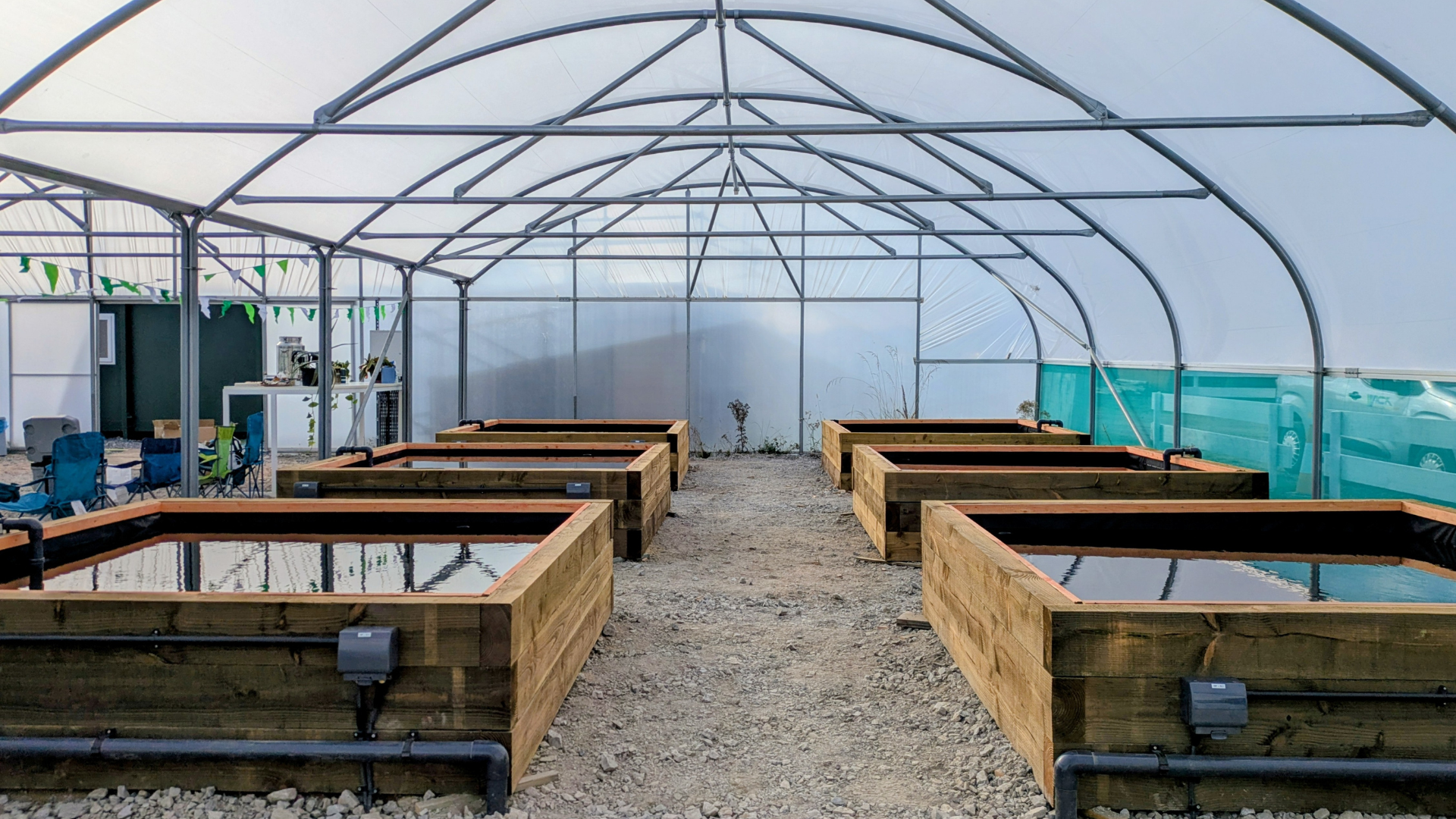
Project Seagrass is celebrating a significant milestone in the development of their Seagrass Nursery facilities in West Wales following the opening of a new multi-span polytunnel. Housing 12 new ponds, the recent expansion has tripled the sites’ previous capacity for polytunnel-based seagrass propagation, strengthening the Nursery’s pivotal role in scaling the restoration of seagrass meadows across the UK. A hub for seagrass research, innovation, and restoration science, the polytunnel opening forms part of a series of exciting developments taking place on site, including further utilisation of outdoor ponds and increased seed storage facilities. The official opening of the new polytunnel took place on the 7th October, welcoming funders, partners, and members of the local community to the site to celebrate the collective efforts which have made the transformations at the site possible. Dr Leanne Cullen-Unsworth, Project Seagrass CEO said: “This expansion is a significant step forward for Project Seagrass and our ambition to enable seagrass recovery at scale. We couldn’t have reached this point without the support of the many funders and partners who have invested in our Nursery recognising and supporting our ambition for what it can become, and we are incredibly grateful. Importantly, this isn’t the end point. The infrastructure we are celebrating today provides a foundation for the next phase of our ambition, and with significant new support we now have an exciting opportunity to build on that momentum, further developing the site as a hub for the research, innovation, and practical capacity needed to accelerate seagrass and wider ecosystem recovery.” Emily Yates, Nursery Manager said: “This event has been a real celebration of how the Seagrass Nursery has developed and what we have achieved in the last 5 years since starting out. The opening of the new polytunnel is a pivotal moment for us as we build upon what we have learnt to scaling restoration across the UK. Not only will it increase our capacity to directly support restoration efforts but to also increase our capacity to support the vital science and research that underpins our work.” The work taking place at the Project Seagrass Nursery is made possible thanks to the support of Swansea University, Salix River and Wetland Services, Waterloo Foundation, Affinity Water, Aviva Community Fund, Moondance Foundation, Harth Hot Chocolate, Levy, Ragus, ERM Foundation, Ozone, and through Accelerate Seagrass a collaborative program being delivered by Climate Impact Partners, Deloitte, Project Seagrass, and the National Oceanography Centre.
Restoration Forth: exploring seagrass restoration efforts in the Firth of Forth
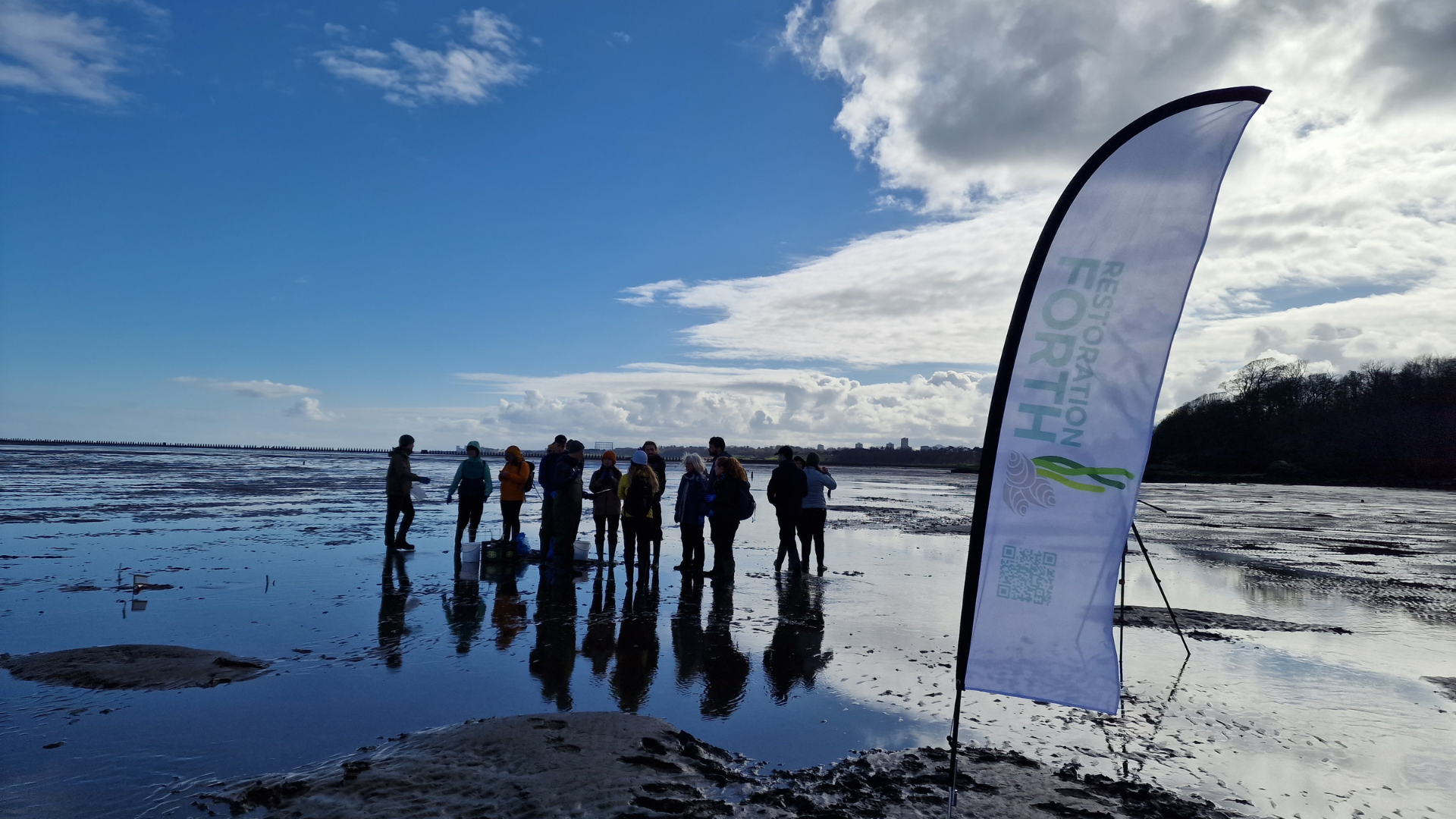
Between 2022 and 2025, the Restoration Forth project brought together charities, local community groups, and scientists, united by the ambitious goal of restoring vital marine habitats within the Firth of Forth. Project managed by WWF UK, and delivered in partnership between Project Seagrass, the Royal Botanic Garden Edinburgh, The Ecology Centre, Heriot-Watt University, the Marine Conservation Society, the Heart of Newhaven Community, the Scottish Seabird Centre, Edinburgh Shoreline, and Fife Coast and Countryside Trust, the project placed participatory, community-led restoration at its heart. The project aimed to restore 4 hectares of seagrass and 30,000 oysters within the Firth of Forth, with a broader ambition to foster long-term behavioral shifts toward coastal stewardship. In this blog article, we explore the seagrass restoration efforts that took place as part of the project and how the lessons learned pave the way for future restoration in the region: Seagrass in the Firth of Forth Records of seagrass in the Firth of Forth date back to 1863, with the earliest specific record of Zostera marina documented at Burntisland in 1823. Evidence for long-term seagrass change in the Firth of Forth reveals a history of significant fragmentation and decline. The estuary’s physical and biological landscape has been fundamentally altered as a result of industrial land claims for industry, agriculture and ports, major infrastructure projects, and routine channel dredging. While the full extent of past seagrass presence in the region is unknown, the Forth can be seen to reflect wider UK trends in seagrass loss. Specimens from the late 1800’s show much longer shoot lengths than those recorded now. As light availability is a strong driver of increasing seagrass shoot length, it is reasonable to expect that the clarity of the waters of the Firth of Forth was previously much higher, supporting more prolific seagrass extent and growth. The seagrass restoration work led by Project Seagrass as part of Restoration Forth aimed to strengthen the integrity of these depleted populations and expand existing fragmented areas. Seagrass restoration Site selection To maximise the chances of success, restoration efforts were focused on sites where seagrass presence had been confirmed or historically reported. Sites were identified using habitat suitability modelling combined with expert input from Dr Alastair Lyndon (Associate Professor at Heriot-Watt University) and senior scientists from Project Seagrass. Site choice was further refined using historical data, local site surveys, and data submitted through the citizen science app SeagrassSpotter The following three sites were selected for seagrass restoration efforts as part of the project: (1) Burntisland in Fife, on the northern shore of the Firth of Forth (2) Drum Sands located in West Lothian, on the southern shore of the Firth of Forth (3) Tyninghame in East Lothian on the estuary of the River Tyne Location of the Restoration Forth sites at Drum Sands, Burntisland, and Tyninghame in relation to Edinburgh and the Firth of Forth It was identified that Burntisland and Tyninghame were best suited for Zostera marina restoration with Drum Sands identified as suitable for Zostera marina restoration, and later for Zostera noltii restoration. These sites enabled the testing of seeding and planting methods tailored to the dynamic intertidal environment of the Forth. Seed Collections and transplants Seagrass seeds for the Zostera marina planting were collected in Orkney in 2022, 2023, and 2024. In 2024, additional seeds were collected from the Firth of Forth and the Moray Firth to investigate germination success across different seed populations. Collections were undertaken by Restoration Forth staff and a small number of trained local volunteers primarily by snorkeling to ensure less disturbance and lower risk of damage to the donor meadows. Prior to collection, all donor seagrass meadows were surveyed to evaluate overall meadow condition and reproductive capacity. Over 260,000 seeds were collected over the course of the project. For the Zostera noltii planting at Drum Sands, transplantation was chosen over seed-based methods due to the constraints surrounding Zostera noltii seed collection as a result of the small seed size and proximity to the sediment. Transplants were harvested from nearby meadows at the site and planted in restoration plots immediately after collection to minimise stress to the plants. This site-specific approach also enabled the team to avoid the secondary introduction of invasive non-native species (INNS) associated with moving seagrass material or sediment between restoration locations. Zostera marina planting efforts and their outcomes 2023 The first Zostera marina planting trials of the project took place in 2023 where 6,500 seagrass seeds were planted at each of the three identified restoration sites: Burntisland, Drum Sands, and Tyninghame. Seeds were planted by Restoration Forth staff and volunteers using the Dispenser Injection Seeding (DIS) planting method developed by The Fieldwork Company. These initial trials were designed to investigate the effects that seed density and injection depth had on germination and seedling survival the results of which would guide future planting efforts. Despite initial positive germination results, the number of shoots diminished over time across all three sites due to site specific challenges. Seedlings at Burntisland were lost following sediment movement which buried the plots. Environmental data captured on site at Drum Sands suggests that the loss of the initial seedlings could be a result of poor light availability from sediments and nutrients after heavy rainfall. No seedlings across the three sites survived into the subsequent year. Overall, seedling establishment from the 2023 planting efforts was unsuccessful, and no viable populations were formed in the Firth of Forth. 2024 In March 2024, a revised planting approach was developed following the sediment movement observed across the 2023 experimental plots. To reduce the risk of further plot burial, circular plots were established within existing tidal pools. 100,00 seeds were planted as part of this year’s restoration efforts. Monitoring took place at all three sites with clear variation in shoot establishment and survival. At Tyninghame, only plot one had shoots growing in July 2024 with all plants having died by August. Burntisland was the only site where Zostera marina established from the 2024 plantings with patterns of initial summer growth