New FAO report highlights why sustainable fisheries must also mean protecting seagrass
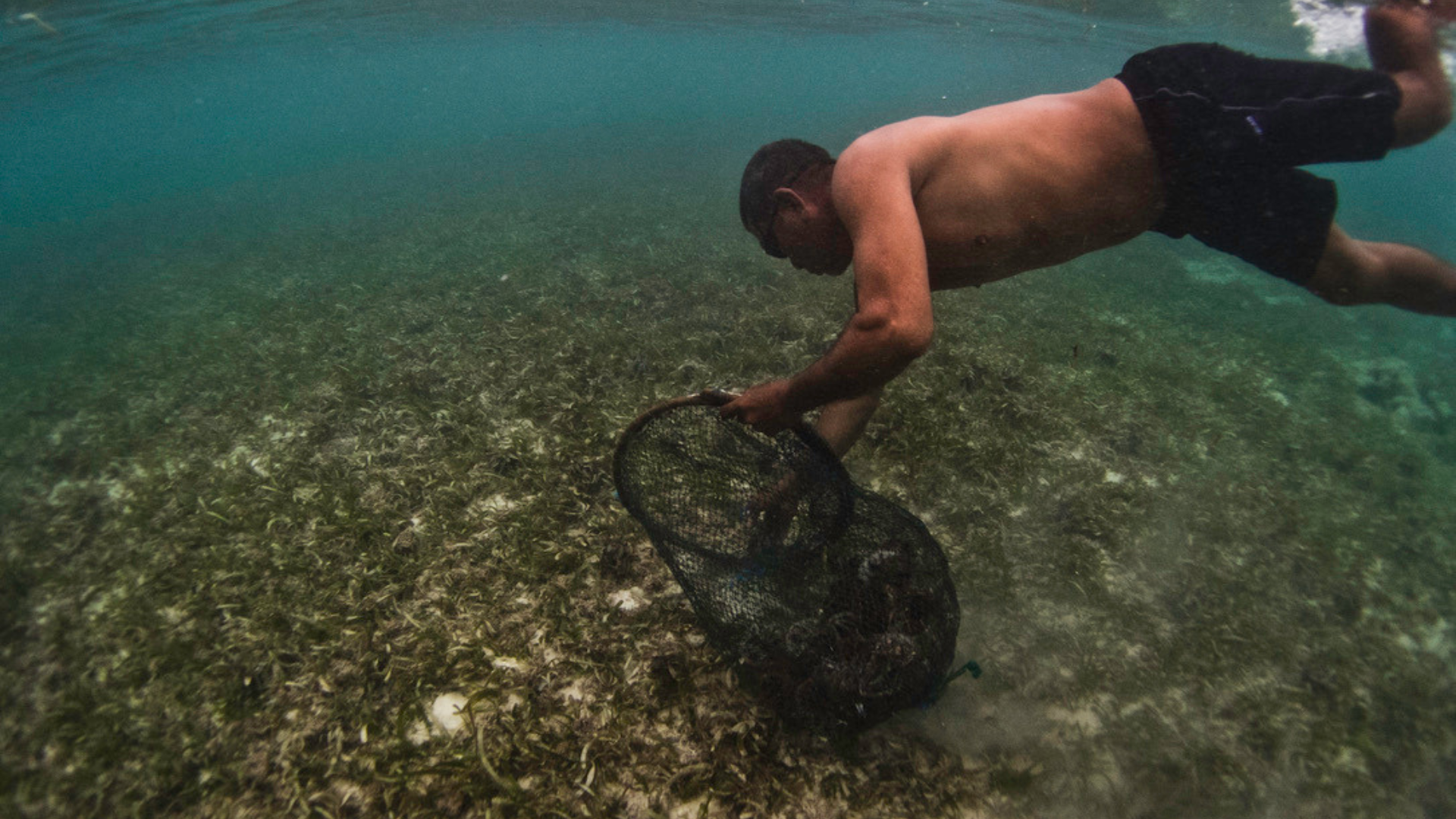
The latest edition of the Food and Agriculture Organization’s State of World Fisheries and Aquaculture report lands with a poignant message. Aquatic foods are no longer a marginal part of the global food system but are central to food security, livelihoods, nutrition, and the health of the Ocean. Global fisheries and aquaculture production reached a record 235 million tonnes in 2024. Aquatic animal foods now provide at least 20% of animal protein for more than 3 billion people, while fisheries and aquaculture support hundreds of millions of livelihoods across fishing, farming, processing, trade, and wider aquatic food value chains. “These numbers remind us that fisheries are not only about boats, landings, exports, or stock assessments. They are also food on people’s plates, income for coastal households, and the ecological systems that sustain fish populations,” said Dr Benjamin Jones, Chief Conservation Officer. Yet seagrass is still too often missing from that story. Seagrass meadows are among the most overlooked fishing habitats on the planet. They provide nursery grounds for commercially important fish, support invertebrate fisheries, and underpin small-scale fishing livelihoods across tropical and temperate coastlines. Previous Project Seagrass research has shown that seagrass meadows provide valuable nursery habitat to more than one fifth of the world’s 25 largest fisheries. This includes species landed at huge global scale, but whose dependence on coastal habitats can remain hidden in national and international fisheries statistics. Most fisheries are assessed at landing sites, in markets, or through stock assessments. The habitats that make those fisheries possible are often not counted at all. For small-scale fisheries, this invisibility is even more acute. Around the world, seagrass meadows are used by fishers, gleaners, recreational anglers, and coastal communities. Some fish from boats, others walk across intertidal meadows at low tide collecting crabs, bivalves, sea cucumbers, or small fish. These activities may not always appear in official statistics, but they can be essential for household food security, income, cultural practice, and resilience during difficult periods. “Data-poor does not have to mean knowledge-poor,” said Dr Jones. “Across many coastal fisheries, people hold detailed knowledge about when fish were abundant, where catches were reliable, when declines began, and how changes in habitats, access, effort, markets, and management have shaped the fishery over time. The challenge is turning that knowledge into information that can support better decisions.” At Project Seagrass, we have been developing innovative ways to generate quantitative status and trend information for fisheries where long-term monitoring data are limited or absent. Termed a Best Catch Assessment, this approach uses structured local knowledge to reconstruct changes in catches, effort, fish size, and perceived fishery condition through time. We have applied the method to recreational catch-and-release fisheries in Costa Rica and the United States, and to small-scale fisheries in India. It is not a replacement for formal stock assessment, but it can provide practical evidence where conventional fisheries data are scarce, fragmented, or unavailable. This kind of approach is especially important for seagrass-associated fisheries. If fisheries management only values what is formally landed, recorded, or traded, it risks overlooking the coastal habitats and community knowledge that make fisheries productive in the first place. At Project Seagrass, our wider research continues to show that seagrass is not simply a habitat but is part of a wider social-ecological system. In numerous coastal communities, seagrass meadows are linked to livelihoods, food security, poverty, gendered labour, local knowledge, and everyday dependence on the sea. Our ongoing partnerships across the Indo-Pacific have revealed that many fishing households live close to seagrass and depend on it directly or indirectly. For some communities, seagrass is not an abstract conservation concern. It is part of everyday life. The FAO report also warns that the sustainability of marine fisheries remains a major concern. The share of assessed marine fish stocks within biologically sustainable levels has declined, and many regions continue to face pressure from overfishing, weak management capacity, habitat degradation, pollution, and climate change. These pressures do not act in isolation. A fishery can be well managed on paper and still be undermined if the nursery habitats, water quality, and coastal ecosystems that support it are allowed to decline. Sustainable fisheries policy must therefore move beyond managing fish stocks alone. It must also protect the habitats that support fisheries production. For seagrass, this means reducing poor water quality, preventing damaging coastal development, managing boating impacts, addressing destructive fishing practices, and making sure restoration is prioritised in places where long-term ecological recovery and community benefits are both possible. It also means listening to the people who know these systems best. Fishers, gleaners, local communities, recreational users, and coastal managers all hold knowledge about where seagrass has been lost, where fish still aggregate, and where restoration or protection could deliver real benefits. “The next generation of fisheries policy needs to take coastal habitats seriously,” said Dr Jones. “Seagrass conservation is fisheries policy, it is food security policy, and it is an investment in coastal livelihoods, biodiversity, and ocean resilience.” The FAO report rightly emphasises effective fisheries management, equitable access, social responsibility, and the importance of small-scale fisheries. These principles need to be applied to the coastal habitats that sustain aquatic food systems. As governments, industry, and civil society respond to the latest global fisheries evidence, seagrass must be part of the conversation. If the world wants aquatic food systems that can feed people, support livelihoods, and sustain ocean life for generations to come, then we need to protect the meadows beneath them.