Exploring the results from restoration trials in South & West Wales
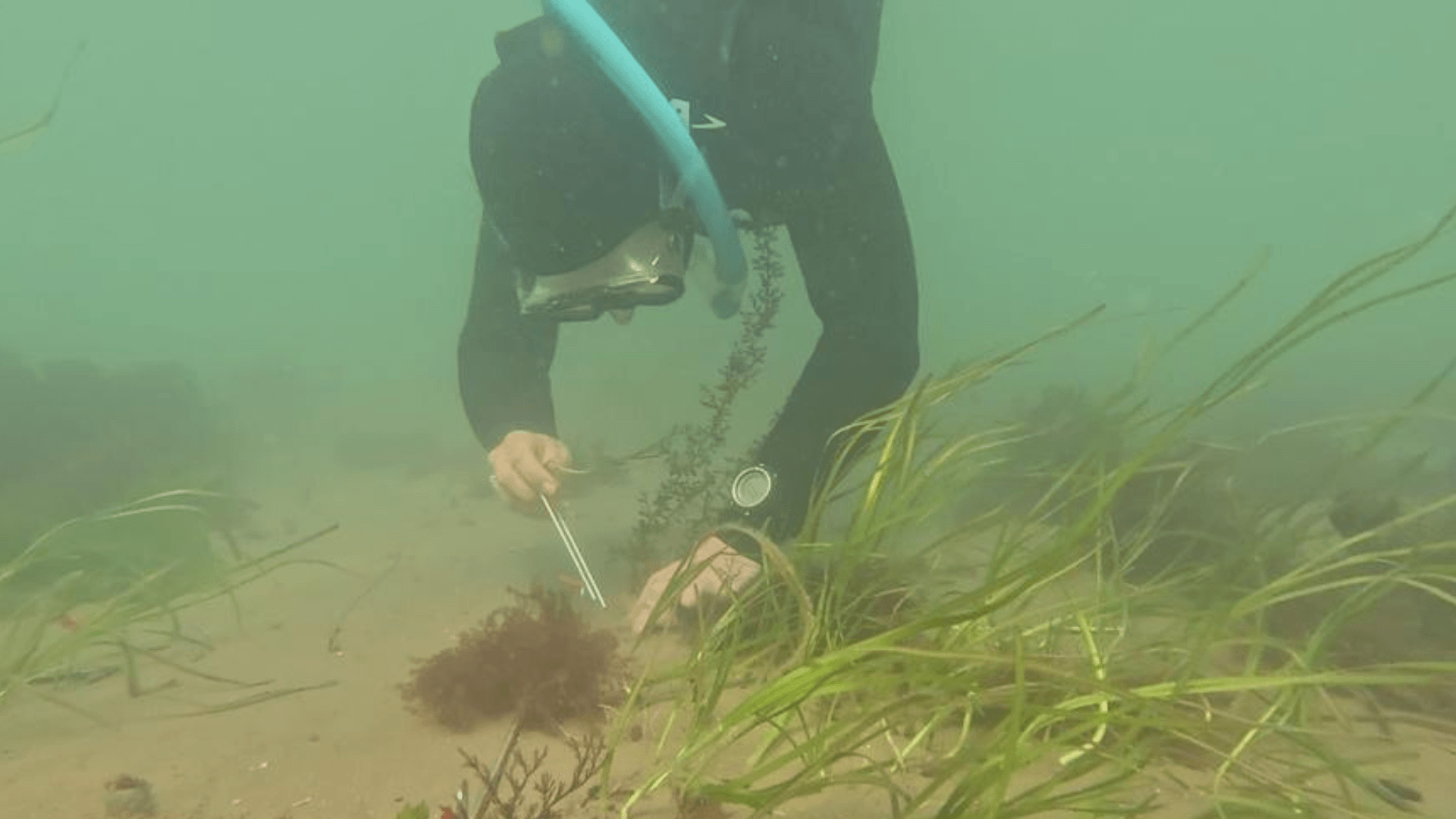
The FANNS programme took place between 2024 and 2026. One of the focuses within the programme was on improving the natural environment through a series of restoration trials across multiple Special Areas of Conservation in South and West Wales. These trials aimed to establish the most effective methods of planting seagrass out into the field. Carmarthen Bay and Estuaries SAC Following site assessments and stakeholder engagement, Ellis Bay in Llanelli was identified as the site for the restoration trials within the Carmarthen Bay and Estuaries SAC. Zostera noltei was identified as the most appropriate species for restoration at this site due to the estuary’s intertidal nature and sediment characteristics. In May 2024, the Project Seagrass team were joined in the field by Carmarthen Bay & Estuaries European Marine Site Officer Judith Oakley and Carmarthen Conservation Coordinator Paul Aubrey. 75 Zostera noltei cores were transplanted from a healthy donor meadow near Llanelli to the Llanelli trial site using the plug method. Monitoring later that summer in August 2024 demonstrated positive results with a significant percentage (40 %) increase in growth from the initial core size, indicating strong early establishment and expansion. These results were highly encouraging, suggesting that Llanelli site conditions were suitable for Zostera noltei transplant success. Members of the Project Seagrass team, Carmarthen Bay & Estuaries, and Carmarthenshire Council collect Zostera noltei transplants from a donor meadow in Llanelli. A Zostera noltei core collected from a donor meadow ahead of transplantation. Building on the success of the 2024 trial, further planting took place in May 2025. 72 Zostera noltei transplants were collected from the donor meadow. The 2025 planting plots were located further towards the foreshore to enable the team to explore planting into alternative sediment types and to more closely reflect the distribution of the natural meadow on the western side of the Bay. Monitoring of both the 2024 and 2025 planting efforts took place in August 2025 with the 2025 planting plots evidencing significant loss. Shortly after transplanting, the site experienced a period of elevated temperatures followed by storm events. Sediment redistribution around the plots was evident during the team’s monitoring which may have destabilised newly planted cores, while heat stress would have compounded physiological stress following transplantation. The previous years planting survival was more varied but generally stronger with plots located closer to the low shore within muddier sediments showing higher survival rates and successful expansion, in some cases demonstrating up to 35% growth relative to the original core size. Plots positioned closer to the foreshore experienced comparatively greater loss. The contrast between 2024 and 2025 results highlights the importance of sediment stability and micro-site selection in transplant success. Given the positive expansion observed in 2024, there is a strong case for scaling up transplant effort within suitable sediment areas across the bay with plans for further transplant trials in Llanelli to build upon this learning. Severn Estuary SAC Within the Severn Estuary SAC, Butetown foreshore in Cardiff was selected as the site for planting trials. This location was identified based on Habitat Suitability Modelling, desk-based reviews, and in-field surveys which revealed the presence of three small, isolated Zostera marina seagrass patches at the site. In May 2024, the Project Seagrass team planted 60,000 Zostera marina seagrass seeds at the Cardiff site, using the Direct Injection Seeding (DIS) planting method developed by The Fieldwork Company. Monitoring later in the summer revealed no germination success from these planting efforts which led to a smaller repeat trial in 2025. A further 3,200 seeds were planted using the DIS method, this time adopting a Seagrass Hug configuration. The Seagrass Hug method has been developed by Anouska Mendzil, Senior Science Officer at Project Seagrass and Swansea University, and aims to determine whether surrounding seed plots with more established seagrass transplants provides protection for emerging seeds in restoration practices. This trial was undertaken in collaboration with the Seagrass Consortium. A total of 525 seagrass transplants were planted at the Cardiff site as part of the trials with varying degrees of success. 75 Zostera noltii transplants planted in 2024 initially showed signs of survival which would have established the presence of an additional seagrass species at the site, creating the potential for future development of a mixed meadow. However, by 2025 these transplants had been lost. 450 Zostera marina further transplants from the Project Seagrass Nursery were planted out in 2025, using coir pots of varying sizes and a mixture of plants that had been hardened outdoors in ponds at the Seagrass Nursery, while the remainder were grown inside the polytunnel. These trials allowed the team to undertake a comparison of transplant establishment by container type and nursery conditioning to inform future restoration approaches. Whilst monitoring highlighted that there had been significant loss from the initial number of transplants planted, several shoots persisted across the different planting methods. However, remaining shoots were generally found to be stressed and silt-covered, indicating environmental pressures at the site. Senior Science Officer Emma Fox undertakes monitoring at the Cardiff site Zostera noltii cores prepared for transplantation in May 2024 Throughout the programme of work, environmental data was gathered at the site to allow the team to monitor site conditions which might have impacted the success of the planting. Several environmental factors are likely to have influenced the restoration success at this particular site including elevated wave energy, high pool temperatures, silt smothering within intertidal pools, high epiphytic load, and the potential that the Zostera marina nursery stock used (from a source population in North Wales) may not represent the optimal ecotype for this environment. The Cardiff trials demonstrated that the Direct Injection Seeding method is not suitable for restoration at Cardiff under current site conditions. Transplant-based approaches showed limited but measurable persistence, with container type influencing relative survival. However, overall survival rates remain low, suggesting that environmental constraints may outweigh methodological refinements at the current scale of intervention. Further trials using transplants from a seagrass meadow in Stolford will allow the team to trial whether plants with a more comparable ecotype show higher levels of success at the site. Pembrokeshire Marine SAC Dale Bay within Pembrokeshire SAC, continued to serve
Seagrass Nursery Open Days 2026
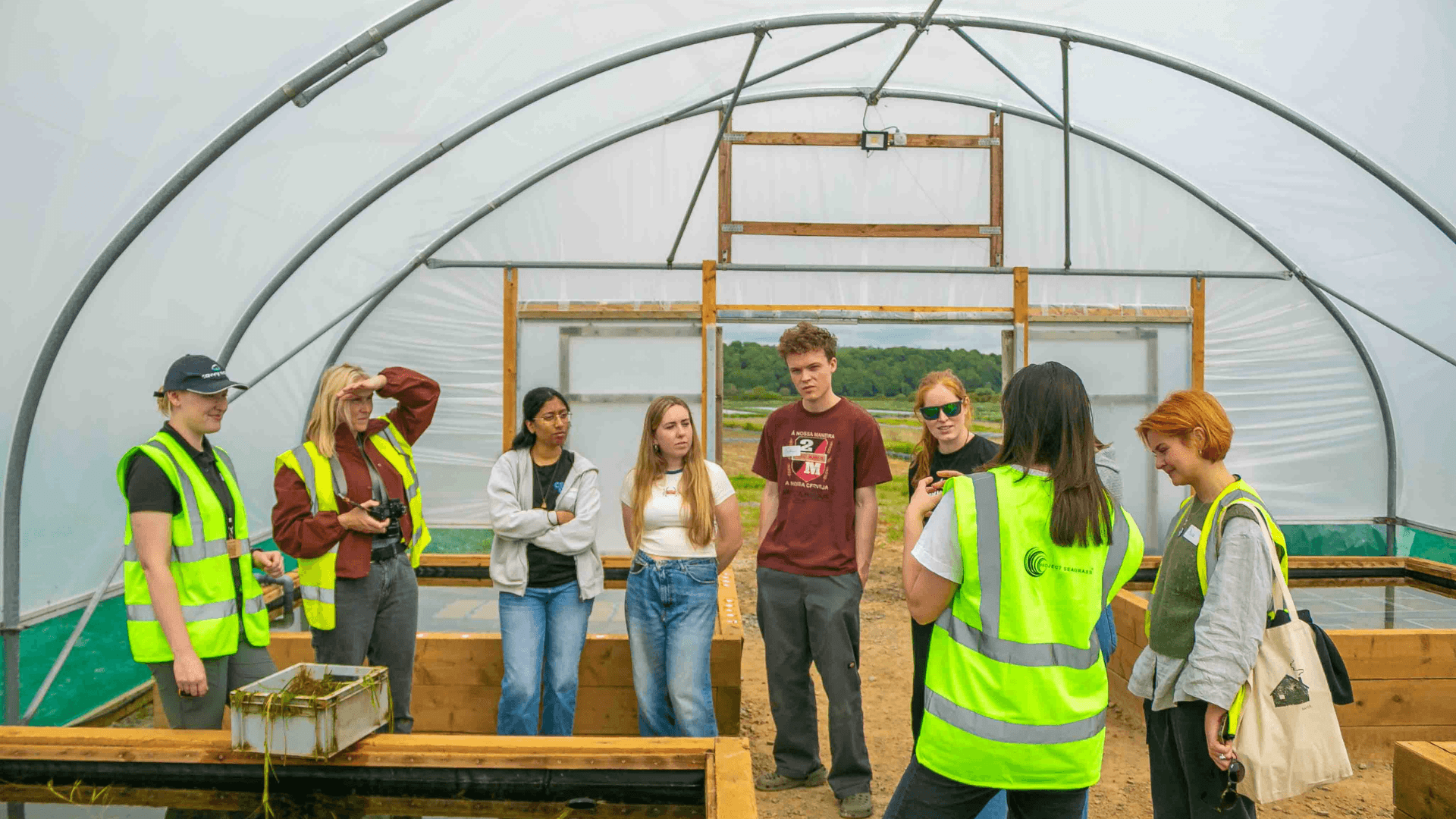
On the 7th, 8th, and 9th May, the Project Seagrass team hosted our 2026 Open Days at our Seagrass Nursery in Laugharne. The Seagrass Nursery Open Days are an annual opportunity for funders, partners, and members of the community to meet the team and learn more about the exciting work taking place on site. On the 7th and 8th May, the team were joined by representatives from Carmarthenshire Council Coastal Protection Team, Celtic Deep, Cygnet, Harth, Laugharne Citizen Science group, SeaLife, Marine Conservation Society, National Trust, Natural Resources Wales, Neath Port Talbot Council, Pembrokeshire Coastal Forum, qinetiq, Severn Estuary Partnership, Wildlife Trust of South & West Wales Swansea Group and 360 Aquaculture. Working collaboratively is essential for successful seagrass recovery and these events provided an opportunity for local stakeholders to discuss existing projects and opportunities for collaboration. On the 9th May the Seagrass Nursery opened its doors to members of the local community with visitors from Laugharne and the surrounding area joining the team to learn about recent developments at the site and seagrass restoration activity taking place in their local area. During the Open Days, visitors had the opportunity to join Nursery Manager Emily Yates for a guided tour of the site. This provided an insight into how the team are growing seagrass, our approach to storing seeds, and the research being undertaken into the best methods for seagrass cultivation. “The Seagrass Nursery Open Days are among some of my favorite days of the year! They provide a fantastic opportunity to welcome the local community to the site to show what we’re doing in Laugharne, as well as the wider work of Project Seagrass. It is great to meet so many enthusiastic people interested in our work whether it’s a first time or a returning visitor. Each year the Open Days provide us with an opportunity to share how the Nursery is developing and evolving over time.” Nursery Manager, Emily Yates. Nursery Manager Emily Yates delivers a tour of the Seagrass Nursery site Nursery Manager Emily Yates and Senior Science Officer Emma Fox delivering a tour of the polytunnel to Nursery Open Day attendees During 2026, 3,300 seagrass transplants were sent out from the Project Seagrass Nursery to support restoration projects across the UK and over half a million seeds stored from in-field seagrass seed collections. Significant developments are currently underway at the site, with plans for 12 additional ponds to be constructed within a second polytunnel over the summer. This will support our ambitions to develop a reliable, scalable source of UK-grown seagrass plants to supply restoration projects. A range of experimental work is currently taking place on the site. Visitors learned about the team’s recent restoration activity in the local area from Senior Science Officer Emma Fox. This has included planting trials across multiple Special Areas of Conservation in South and West Wales aimed at establishing the most effective methods of planting seagrass out into the field to support habitat recovery. Find out more about the planting trials. Katie Lee, Horticulture Supervisor at Salix with Open Day visitors Visitors at the Seagrass Nursery Open Day look out from the polytunnel over the outdoor ponds Katie Lee, Horticulture Supervisor at site partner Salix hosted a stand to discuss the work taking place on the wider site in Laugharne and Salix’s work to provide sustainable solutions to the challenges found in soil erosion control and river restoration projects. Seagrass meadows are havens of biodiversity, providing habitat, food, and shelter to thousands of species of fish, invertebrates, mammals, reptiles, and birds. Visitors also had the opportunity to experience the abundance of life within a seagrass meadow through Project Seagrass’ new VR experience. With music from the organisation’s patron Coldplay and footage from Welsh seagrass meadows, the experience provides an insight into the important role that seagrass plays for wildlife. Visitors had the opportunity to Project Seagrass’ VR experience “My Seagrass Adventure” A visitor explores UK seagrass meadows as part of the “My Seagrass Adventure” VR experience Project Seagrass is grateful for the support of our Seagrass Nursery funders who make this work possible.