
Hurricanes devastated Florida’s East Coast. Then seagrass made an unexpected comeback
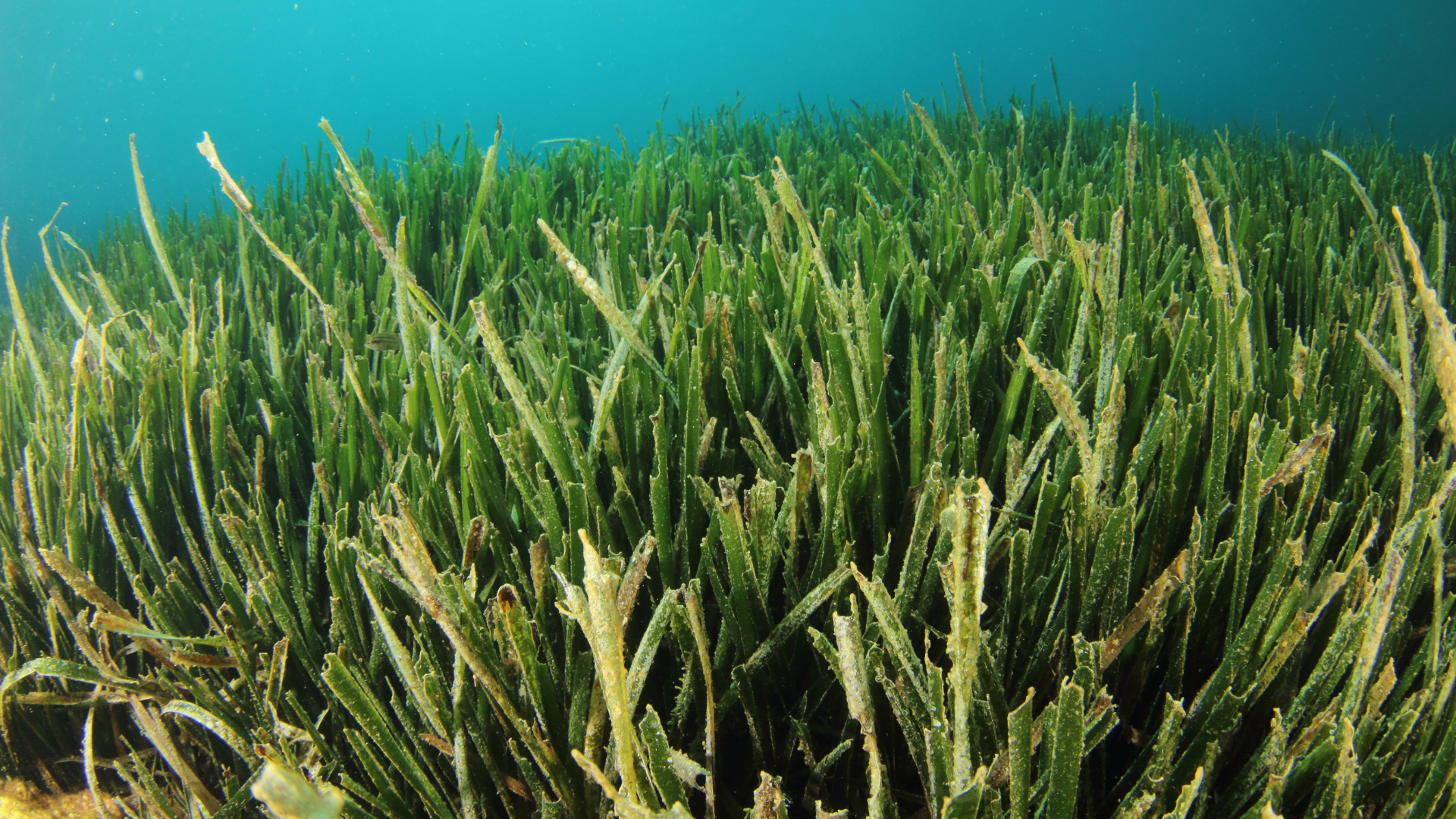
Hannah Harrero and Stephanie Insalaco-Wyner, geographers from Florida, comment on differing methods of monitoring the resilience of seagrass meadows in Florida’s ‘Mosquito Lagoon’, following a number of extreme weather events. Florida’s Indian River Lagoon has been an ecosystem in decline going back to 2011, when harmful algal blooms led to a severe decline in seagrass, the foundational component of shallow coastal ecosystems. Seagrass meadows stabilize sediments, improve water clarity and provide critical habitat and forage for species ranging from invertebrates to sea turtles and manatees. Seagrass also generates a significant amount of economic activity in the state of Florida. The loss of seagrass in the Indian River Lagoon System undermined fisheries, tourism and wildlife, ultimately leading to the starvation of more than 1,200 manatees from 2020-25, peaking in 2021-22. Mosquito Lagoon is part of the Indian River Lagoon system that spans 28 miles (45 kilometers), running from Cape Canaveral in the south up to Ponce Inlet in the north. As in the rest of the lagoon system, years of nutrient pollution and recurring algal blooms had diminished seagrass cover to nearly zero by the early 2020s. By most accounts, Mosquito Lagoon had crossed a critical ecological tipping point. In the fall of 2022, hurricanes Ian and Nicole struck Florida’s east coast within six weeks of one another, bringing intense rainfall, storm surges and coastal erosion. In the immediate aftermath, seagrass declined even further. But a few months later, in the spring of 2023, seagrass began to return. Satellite imagery revealed rapid and widespread regrowth. Hannah and I are geographers who study environmental change. Our research documents this unexpected recovery and examines what it may reveal about ecosystem resilience in heavily degraded coastal systems. One of us, Hannah Herrero, is a Volusia County native who grew up around the lagoon. She returned to her hometown at the outset of the COVID-19 pandemic. It was there that some local guides and fishermen she’d known for years suggested that our team should use satellite imagery to look at the state of collapse in the lagoon. The study we designed as a result used satellite imagery and machine learning, a type of artificial intelligence that uses advanced algorithms to learn and predict patterns, to track seagrass dynamics in Mosquito Lagoon before, during and after the storms. This approach allowed us to observe change at a scale and frequency that is difficult to achieve using only traditional field survey methods. Florida Manatee Tracking seagrass from space Monitoring seagrass coverage “the old-fashioned way” involves going into the lagoon and laying out transects, straight lines that cut through a landscape, so standard observations could be recorded. We would then have to boat or wade all along those lines to measure seagrass extent and locations and create digital maps manually to show where it is present. As you can imagine, this is a time-intensive process that’s limited by how far you can boat or swim in a day, and by financial resources. So we decided to use satellite imagery instead. This method is not without its own challenges—water turbidity, or cloudiness, seasonal variability and the patchy nature of vegetation that grows on the bottom of the lagoon all make it difficult to observe seagrass growth directly on the imagery. To address this challenge, our study used imagery from NASA’s Harmonized Landsat–Sentinel program, which combines data from multiple satellites into a consistent record of photos of the same areas taken frequently over time. We analyzed imagery collected between September 2022 and January 2024, focusing on periods before and immediately after the hurricanes and throughout the subsequent recovery. We applied a type of machine learning model called Random Forest to classify each image into seagrass and nonseagrass categories. The machine learning algorithm is informed by training samples collected in the field, but once the model has learned the signature of seagrass, it is able to then apply the classification model to the rest of the lagoon and across time with limited human input. We can then validate this classification. Heading into the field First, we had to train the model using hundreds of GPS points collected in the field over multiple seasons. This step helps to ensure that satellite classifications align with on-the-ground conditions and are accurately interpreting the images. Over several weeks during the summers of 2020 through 2023, our team spent many hours navigating Mosquito Lagoon in a small skiff designed for shallow depths, recording seagrass presence. It wasn’t always easy — Florida summers are intensely hot and humid, and Mosquito Lagoon definitely lived up to its name. But we got to see a wide variety of wildlife, including manatees, dolphins, sea turtles and alligators. And occasionally, on lucky days, we even spotted a roseate spoonbill or reddish egret. Our experience in the field highlighted why this system matters: Mosquito Lagoon is a remarkably vibrant place, teeming with wildlife. These long days on the lagoon, surrounded by its biodiversity and immersed in its unique sense of place, are what anchor the remote sensing data to on-the-ground ecological conditions and make the resulting models credible. The authors wade into Mosquito Lagoon to track seagrass growth as they train their AI model. Captain William B. Wolfson, Grassroots Guide Service, New Smyrna Beach, FL What we found Our analysis reveals three distinct phases of seagrass coverage. First, seagrass declined sharply following hurricanes Ian and Nicole. By December 2022 and early 2023, satellite imagery showed virtually no detectable seagrass across the lagoon. Then, in March 2023, we identified a statistically significant shift. Seagrass began to reappear, initially in small, scattered patches. Finally, during late spring and summer 2023, seagrass expanded rapidly. By July 2023, it covered more than 20% of the lagoon—levels not observed in more than a decade. Coverage then declined again during the winter of 2023–24, as expected based on seasonal growth cycles. But even our last observation, completed in January 2024, showed seagrass covering 4.3% of the lagoon, substantially higher than pre-recovery levels during the winter season. In spring 2026, seagrass in Mosquito Lagoon has remained at stable levels. Although it still experiences fluctuations due to algal blooms, seasonality and other changes in the ecosystem, we have not seen a