

Accelerate Seagrass: Exploring the process of site selection
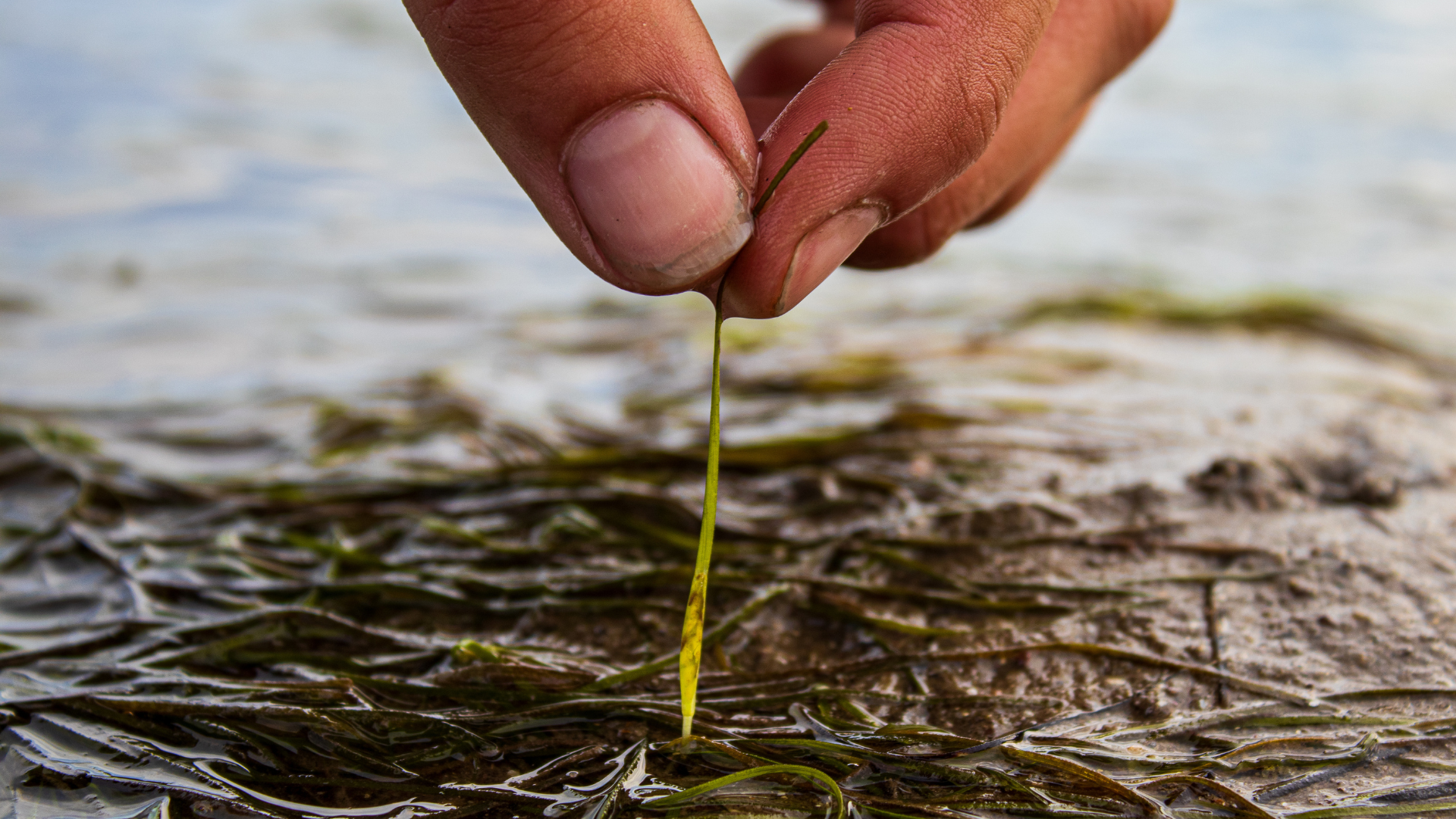
Accelerate Seagrass is a collaborative program being delivered by Climate Impact Partners, Deloitte, Project Seagrass, and the National Oceanography Centre which aims to support groundbreaking research into seagrass carbon sequestration and unlock long-term finance to save and reinstate vital seagrass meadows. Part of this programme of work involves collaborating with community groups across Scotland to develop knowledge of historic and current seagrass meadows and the threats facing Scottish seagrass today In this blog, our interns Ewan Garvey and Jasper Brown explain the process of site selection at Project Seagrass. Site selection is a process that allows Project Seagrass to identify locations where experimental work or restoration is most likely to succeed. It involves the analysis of existing information, suitability models, and field data. As seagrass meadows are complex ecosystems, these steps are necessary to ascertain the most suitable site for a work package to take place at. 1. Existing Information Often, the first aspect is creating a database of all information surrounding seagrass in the area, including: current and past research, intertidal maps, local knowledge and satellite images. Key information is gathered from: SeagrassSpotter – for recent presence of seagrass as well as species, area cover and sediment type. Historical records – often from local surveys carried out by councils and fisheries. This is used to try quantify the meadow recession or growth. ⁽¹⁾ By collecting this information, we validate the presence of seagrass at sites of interest, and begin to understand potential issues. A screenshot of Seagrass Spotter includes spotter points used in Buent Island survey 2. Habitat Suitability Modelling Habitat suitability modelling is used to compare the characteristics of viable sites. It uses data such as: Temperature, Bathymetry, Salinity, Light availability. The model is created through the use of software like MaxEnt, by inputting many datasets to quantify the likelihood of seagrass presence/ the ability of the environment to sustain seagrass. ⁽²⁾ Limitations: HSMs are only as good as the data they are based on Marine habitats often have very little data on them This means it’s only a small piece of a larger picture 3. Field Data collection and analysis In addition to the collection and modelling of existing data, we visit field sites to gather baseline monitoring data. Typically, we collect data on: the presence of seagrass, the health of the seagrass, reproductive state, and the local environment – such as sediment type. These datasets are collected through sediment and core samples as well as seagrass blade lengths and abundance counts. Common Difficulties: Land access – some sites can be quite remote, therefore making field surveys difficult. Permissions from both governing bodies and landowners. Ensuring the work doesn’t interfere with other projects on the land. 4. Selection By combining these data, the project lead, along with other experienced ecologists, can assess the suitability of each site for the proposed work package. Project Seagrass is currently working on a numerical system for grading the suitability of sites, to make site selection decisions more transparent. Once the most suitable sites are selected, Project Seagrass can begin to formally seek permissions from governing bodies and landowners. 5. Future Developments Site selection, just like seagrass science, is continuously evolving as new methods, theories and techniques are developed and tested. This means that the models used are constantly changing to produce more accurate and reliable results. Current Site Selection Research: LUSI scores allow the impacts of land on marine environments to be quantified. ⁽³⁾ Use of multiple models such as MaxEnt, cross validation, and threshold probability for model validation has been shown to produce more effective outputs. ⁽²⁾ A Habitat suitability model used for work in Burnt Island, Scotland References Thurstan, R.H., McClenachan, L., Crowder, L.B., Drew, J.A., Kittinger, J.N., Levin, P.S., Roberts, C.M. and Pandolfi, J.M. (2015). Filling historical data gaps to foster solutions in marine conservation. Ocean & Coastal Management, 115, pp.31–40. doi:https://doi.org/10.1016/j.ocecoaman.2015.04.019 Bertelli, C.M., Stokes, H.J., Bull, J.C. and K.F. Unsworth, R. (2022). The use of habitat suitability modelling for seagrass: A review. Frontiers in Marine Science, 9. doi:https://doi.org/10.3389/fmars.2022.997831. Flo, E., Garcés, E. and Camp, J. (2019). Land Uses Simplified Index (LUSI): Determining Land Pressures and Their Link With Coastal Eutrophication. Frontiers in Marine Science, 6. doi:https://doi.org/10.3389/fmars.2019.00018..
Open Letter to Crown Estate Scotland. Scottish Seagrass Collaborative Response to: Approach to Marine Enhancement Proposals (issued November 2025)
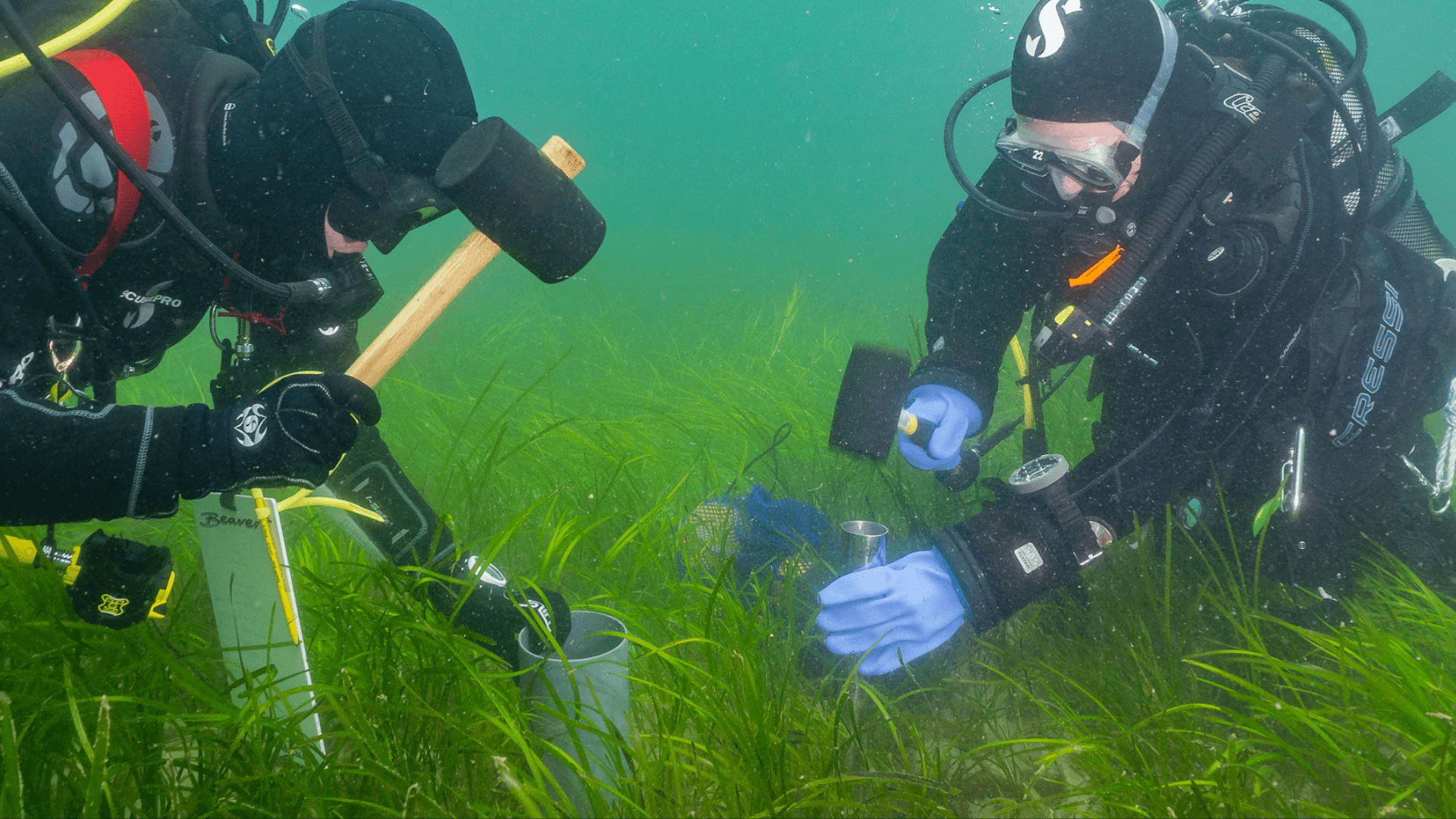
The Scottish Seagrass Collaborative, responds to Crown Estate Scotland’s Approach to Marine Enhancement Proposals: We write as marine scientists, restoration practitioners, and organisations working across Scotland’s coasts and seas, in response to Crown Estate Scotland’s Approach to Marine Enhancement Proposals. We welcome Crown Estate Scotland’s commitment to responsible stewardship of the seabed and its recognition that marine enhancement activities—such as seagrass meadow and native oyster restoration—deliver important public benefits. We also recognise the intention behind the Non-Commercial Enhancement Licence to provide a light-touch mechanism to support this work. However, we are concerned that the approach, as currently set out, risks creating unintended barriers to marine science, restoration, and climate action in Scotland—particularly through the inclusion of low-impact scientific surveys and sediment sampling (such as coring) within licensable activities. We ask: a zero-cost exemption for non-commercial, not-for-profit restoration activities to incentivise biodiversity positive activities rather than impose barriers and work collaboratively in consultation with the research and restoration community to develop all current and future guidance. Why sediment sampling matters Sediment coring and similar sampling methods are essential scientific tools. They are used to: identify and map habitats that store “blue carbon”; measure how much carbon is currently stored, and how much could be restored; design effective and well-targeted restoration projects; monitor whether restoration is successful over time; meet Scotland’s national and international obligations on climate and biodiversity reporting. These activities are temporary, small-scale, and reversible. A typical sediment core affects an area measured in centimetres, not metres, and causes negligible environmental impact. Treating this type of research in the same way as seabed occupation, construction, or extractive use risks undermining proportionality and evidence-based decision-making. Risks to restoration and blue carbon science Scotland is recognised internationally for leadership in marine nature-based solutions and blue carbon research. Yet marine carbon cannot be measured or verified without physical sampling of seabed sediments. Requiring licences, fees, and extended approval timelines for this work risks: creating significant barriers to non-commercial marine restoration at a time when policy and science point toward the need for rapid development and scale-up. Applying fees and additional bureaucracy to generative, public-benefit restoration is counterproductive and misaligned with national biodiversity and climate goals. Marine habitat restoration is non-commercial, non-extractive, and enhances seabed value delivering public benefits (blue carbon, fish nurseries, nutrient remediation) that exceed licence costs. slowing down urgently needed research at a time when climate and biodiversity action must accelerate. Non-Commercial Marine Habitat Restoration in Scotland is currently driven by small non-profit eNGOs and community-led projects that struggle for funding. For example, the charity Seawilding is trialing seagrass and native oyster restoration methodologies in multiple sites in Argyll and Wester Ross. Along with others, the charity is developing the science, the know-how, and the methodologies to allow restoration at scale. The existing licensing regime and cost is already burdensome. To pile on more poses an existential threat to Seawilding and this essential work. creating barriers to delivering the Scottish Biodiversity Strategy to 2045 and the Marine and Coastal Restoration Plan. The proposed charges are counter to the Strategy & Plan, which encourages active restoration by community-based organisations and advocates streamlining and simplifying the process. In addition, the charges will create additional barriers to achieving targets in the Scottish Biodiversity Strategy to 2045 and the upcoming Natural Environment Scotland bill. Recent work by a panel of expert restoration researchers and practitioners highlighted that adding licensing costs and complexity makes small-scale restoration increasingly unfeasible and favours large developers without restoration expertise. Read more here. making publicly funded research harder to deliver within fixed budgets and timelines. discouraging foundational science before any future natural capital markets are even considered. adding bureaucracy where policy intent is to enable, not constrain, restoration. While the policy excludes natural capital markets, the paradox is that the research needed to responsibly inform any future policy on blue carbon is now harder to carry out. All public bodies, including seabed owners, have duties to support biodiversity recovery and climate action. Those goals cannot be met without access to the seabed for scientific research. Our request We respectfully ask Crown Estate Scotland to: Explicitly exempt low-impact, non-commercial scientific sampling (including sediment coring) carried out for research, restoration design, monitoring, and blue carbon assessment from licensing requirements; or Introduce a clear, fast-tracked, cost-free notification or consent process for these activities, separate from enhancement or occupation licences; and Work collaboratively with the research and restoration community to develop guidance that recognises the essential role of scientific sampling in delivering national biodiversity, climate, and nature-recovery objectives. Closing We strongly support Crown Estate Scotland’s ambition to be a responsible and proactive steward of the seabed. We believe this ambition will be best realised by ensuring that essential scientific research is enabled rather than hindered. Applying fees and additional bureaucracy to low-impact, public-benefit restoration science risks creating significant unintended barriers at a critical moment for Scotland’s seas. We ask for the Crown Estate to incentivise biodiversity positive activities rather than impose barriers such as this licensing and fee. Letter endorsed by: Action West Climavore Loch Dail an Inbhire croft Heriot Watt University Moray Ocean Community Open Seas Project Seagrass Scotland’s Rural College Seawilding Shark and Skate Scotland Solway Firth Partnership University of Edinburgh University of Glasgow