

Reflections from the IUCN World Conservation Congress: From Knowledge Exchange to Implementation
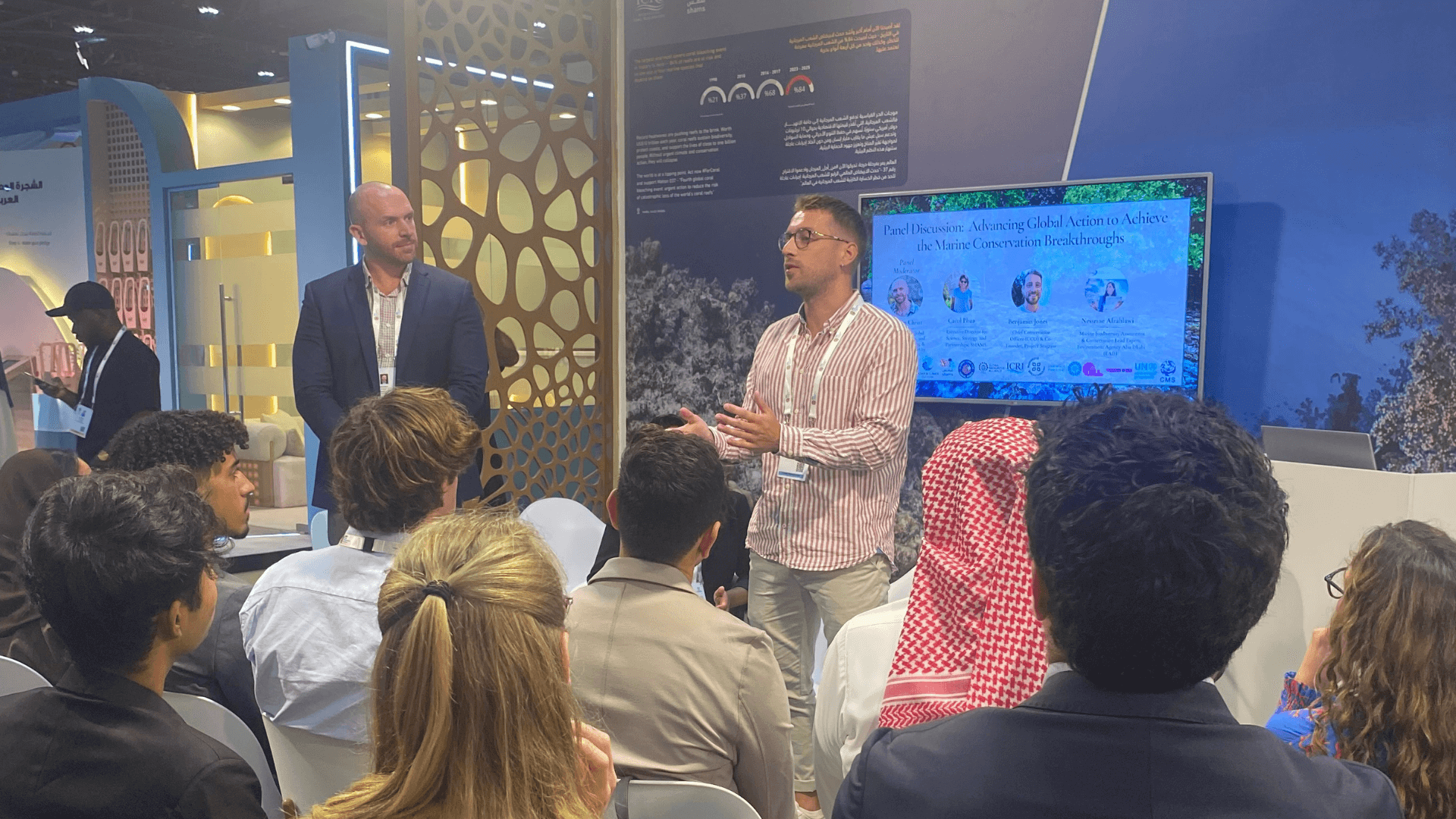
Chief Conservation Officer Dr Benjamin Jones reflects on the IUCN World Conservation Congress: The IUCN World Conservation Congress is, at its core, about knowledge exchange. Experiencing it first-hand made clear just how ambitious and wide-ranging that exchange has become. Across the week, the Congress unfolded through a programme of workshops, panel discussions, films, exhibitions, demonstrations, and informal conversations. The scale was remarkable. At any given moment, the real challenge was not finding relevant sessions, but choosing which ones to miss. The number of talks alone was extraordinary. Major thematic sessions were held in plenary across five large halls, complemented by collaboratoriums designed for deeper discussion. Alongside this, the exhibition hall functioned as a Congress within a Congress. Around 30 pavilions, each focused on a particular theme, geography or sector, ran their own mini-conferences, often for 20 to 30 people at a time. These spaces created opportunities for focused dialogue with practitioners, policymakers, Indigenous leaders, researchers, and businesses. These pavilions reflected the breadth of the global conservation movement. There were dedicated spaces for the Americas, Indigenous Peoples, youth, business, and regional IUCN hubs including Arabia, Mongolia and Japan. IUCN also hosted a parallel virtual programme, with many sessions broadcast online so participants could engage without travelling to Abu Dhabi. This level of accessibility and exchange was impressive, if also slightly overwhelming, as I often found myself wanting to attend several sessions simultaneously. Learning Beyond the Marine Space One of the most valuable aspects of the Congress for me was the opportunity to learn from beyond the marine conservation space. I spend much of my time at ocean-focused conferences, surrounded by familiar narratives and challenges. At IUCN, the strong presence of terrestrial conservation organisations offered a different perspective, and a useful reminder that many of the issues we face are shared. Despite differences in ecosystem and context, the challenges are strikingly similar. Organisations across land and sea are grappling with long-term financing, governance complexity, equity and justice, and the difficulty of translating global commitments into local action. Seeing how these issues are addressed in terrestrial conservation reinforced the value of cross-ecosystem learning and collaboration. People of the Oceans: Centring Communities in Ocean Action A highlight of the Congress was the People of the Oceans Breakthrough session. The session brought together Indigenous Peoples, local communities, governments and supporting organisations from around the world to collectively shape a path forward for ocean and climate action. The discussion was held in an interactive fishbowl format and marked an important step towards defining a People of the Oceans Breakthrough. The aim is to ensure that Indigenous and local coastal peoples’ knowledge, rights and leadership sit at the centre of the global ocean agenda. The session opened with a powerful performance by Kevin Chang of Kuaʻāina Ulu ʻAuamo from Hawai‘i. His song, celebrating the deep connection between people, culture and the ocean, set a tone grounded in relationship and reciprocity. In their opening remarks, Thomas Sberna and Vatosoa Rakotondrazafy of IUCN called for a coordinated ocean and climate community that moves from commitment to implementation, with People of the Ocean at its heart. They emphasised that local stakeholders are best placed to drive this agenda forward. As Vatosoa Rakotondrazafy noted, while the Ocean, Mangrove and emerging Seagrass Breakthroughs are critical, none can succeed without the leadership of local and Indigenous communities. This is the foundation on which the People of the Oceans Breakthrough has been built. Advancing Marine Conservation Breakthroughs My own contributions to the Congress focused on advancing marine conservation from ambition to delivery. I was invited as a panel speaker for the session “Advancing the Marine Conservation Breakthrough: Connecting Global Action to Scale Marine Nature-Based Solutions.” The session placed Marine Nature-Based Solutions firmly at the centre of efforts to deliver on both climate and biodiversity goals. The discussion brought together governments, finance institutions, private sector actors and expert practitioners to highlight concrete opportunities to protect and restore coastal marine ecosystems at scale. My contribution focused on the practical realities of implementation, including how initiatives such as the Seagrass Breakthrough can bridge global commitments with locally led action. The session also provided updates on progress across the Ocean Breakthroughs campaign, including the Seagrass Breakthrough. I also delivered formal remarks during the session on Mobilising the Ocean Breakthroughs for Ecosystem Conservation in the MENA Region. This closed-door, high-level dialogue formed the culmination of the MENA Oceans Summit 2025 and brought together board members, policymakers, partners and regional stakeholders. My remarks focused on the Seagrass Breakthrough and its relevance to the region, highlighting opportunities for regional leadership, innovation and scalable conservation. The session showcased transformative projects linked to the Mangrove, Seagrass and Coral Breakthroughs, while identifying synergies and shared priorities across the region. From Congress to Consequence What stood out most from the IUCN World Conservation Congress was the clear shift towards delivery. Across ecosystems, sectors and regions, there was a shared recognition that ambition now needs to translate into action. The Congress demonstrated that the knowledge, networks and frameworks are already in place. The task ahead is to ensure that implementation is inclusive, locally led and grounded in the realities of the people most closely connected to nature.