

8 weeks to go! Sponsor SJ for the London, Edinburgh and Stockholm marathons in 2017.
Hello again folks, So, we’re less than 8 weeks out from the London Marathon (23rd April) and the training is going well. My longest distance so far is 17 miles and we’ve got an 18-mile run in the diary for this weekend. The mornings are beginning to get lighter earlier (sunrise was at 07:08 this morning) Luckily for us, the mornings are beginning to get lighter earlier and so I am no longer starting my runs in the dark before I start work. The Edinburgh Marathon (28th May) is still a little over 12 weeks away and so there is a nice gap between the first two marathons. However, I think the real challenge will be backing up for the Stockholm Marathon (June 3rd) just a week later! We were in Stockholm this weekend, and whilst sunny it was cold! Let’s hope for a warmer marathon weekend! But why I am I doing this challenge? To raise money for Project Seagrass of course! I’m not a scientist, but I wanted to help the team in a way that I can and support them on their mission to raise awareness of seagrass meadows. Personally, I have learnt so much about these amazing ecosystems and I admire the dedication these guys have shown in growing Project Seagrass into the successful organisation it is today. I mean what an amazing achievement to build a charity from scratch whilst working full time! Surely their efforts alone are worth some sponsorship? Donate SJ x If anyone, like SJ, has a desire to challenge themselves for charity then we are all ears! Simply contact us at info@projectseagrass.org
Fulsnygg! Loving The Ugly Duckling
For nearly 10 years I have been teaching, writing, tweeting, speaking, blogging, presenting and workshopping pretty much around the clock, in my role as a science teacher, a diving instructor, and now presently as a Science Communicator here at Project Seagrass. I’ve learnt to use all the communication tools I can – from websites, books, and newspaper articles to photographs, videos, lectures and feature documentaries. I’ve done my level best to communicate science using kindergarten science kits, through to syllabus prescribed carbon chemistry, and through delving into the emotional narrative and philosophy that I surround climate change discourse with at the college level. Yet I still struggle with doubt that I’m not doing enough to communicate the importance of science and what science means to humanity. Principally what it means to adopt a rational, logical and Fact-Based Worldview. In this brave new world of ‘alternative-facts’ and an open war on science, and after the untimely news of the passing of a personal hero of mine Hans Rosling (a grief shared by many I’m sure), I felt it pertinent to put my stake in the ground for science. Furthermore, it was important to articulate my LOVE on Valentine’s Day – both for science (the pursuit of truth) and of course for my beloved “ugly duckling” – our disappearing seagrass meadows. Show your love for seagrass meadows this Valentine’s Day I guess this blog sort of starts with my trainee teacher year in 2007, and the need I had to learn to communicate national curriculum prescribed science to my science classes. At the time, I did my best to become a ‘good teacher’; I read up on the latest science, and I delivered the facts as I knew them to the class, making sure they would have the right information, to get the right answers come exam time. I ticked all the right boxes. All that information was important (of course!), but I did worry that by being so calm, clinical and methodical in my pedagogy, that perhaps I was implicitly sending the message that some of the more existential science we covered (global phenomena like climate change and ocean acidification) were these just more facts to learn on the way to exam success. I thought maybe the planet wasn’t in a crisis at all… After all, why else would I be so calm about it? Working as a Science Teacher is a privilege, but also a great responsibility. Perhaps another reason I struggled was because of guilt. To quote Naomi Klein; “Climate change is intergenerational theft”. Shouldn’t I be discussing how this makes my students feel? Shouldn’t I be showing more anger at the path we are choosing to follow? Shouldn’t I be doing everything in my capacity to open their eyes to these issues and encourage them to alter the course we’re taking? Luckily for me, in 2006, Al Gore released a ‘An Inconvenient Truth’, a documentary film about former United States Vice President Al Gore’s campaign to educate citizens about global warming and the science of climate change. (Quick heads up – ‘An Inconvenient Sequel: Truth to Power’ will be in theatres July 28, 2017, and whilst I am here, you should also watch Before The Flood, November 6, 2016) To quote Naomi again; “The safety and habitability of our shared home is intensely emotional terrain, triggering perfectly rational feelings of loss, fear and grief”. Yet, despite these occasional emotionally charged narratives, climate discourse is often a clinical affair, weighed down with statistics (but yes we still need them!) and political jargon. Even in the sunshine, collecting data to be made into statistics can be an unengaging affair! Unfortunately, the tone of scientific discourse often fails to capture the feeling of what we stand to lose. Casting my mind back I remember when I first watched this passage from Al Gore I cried. (video link through text); “You see that pale, blue dot? That’s us. Everything that has ever happened in all of human history, has happened on that pixel. All the triumphs and all the tragedies, all the wars all the famines, all the major advances… it’s our only home. And that is what is at stake, our ability to live on planet Earth, to have a future as a civilization. I believe this is a moral issue, it is your time to seize this issue, it is our time to rise again to secure our future.” It made me realise that sometimes we need to go beyond statistics, and harness emotions if we are to communicate a real sense of importance. Ever engaged with the humble seagrass meadow! Seagrasses have been termed the ‘ugly ducklings of marine conservation’ ecosystems and there are enormous stakes of losing these productive carbon sinks and fisheries powerhouses. I have previously written that the loss of seagrass meadows is a carbon time bomb and we have even tried to link our science to what we think people care about… “For the love of cod, let’s save our disappearing seagrass” I’ve been quoted before stating that it is the people we love and care about that depend on seagrass and have tried to phrase this in the simplest way I know how; “So many coastal fishing communities are dependent on coastal health. To put it simply, if there are no baby fish, there are no adult fish and if there are no adult fish, there is no fishing industry” I’ve even put my signature on the World Seagrass Association’s statement, and a ‘call for action’ to protect ‘the lungs of the sea’. However, despite all this, I still don’t feel that the emotion, the genuine care and passion for raising awareness of this ecosystem is getting across in my message. So, let me attempt a new tactic, one that moves beyond the statistics and the science. Let me simply declare a LOVE for the most underappreciated, unrecognised and unknown of marine ecosystems, the humble seagrass meadow. Seagrass you are Fulsnygg! Fulsnygg (Ugly-Beautiful) is Swedish, and is the feeling that somebody (or something) is attractive despite its lack of
Volunteer Update! Training for the London, Edinburgh and Stockholm marathons in 2017.
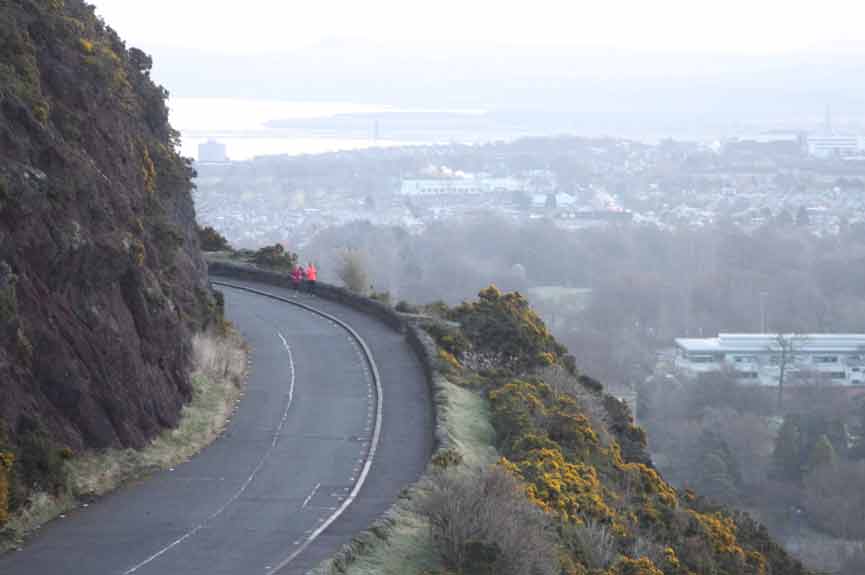
Hello! My name is Sarah Jane Pope and this year I am running the London, Edinburgh and Stockholm marathons this year to raise money for Project Seagrass. I’ll get straight to the point… You can sponsor me here! http://uk.virginmoneygiving.com/SJPopester I decided to take up this challenge because I wanted to help support Project Seagrass cause, and help the team on their mission to raise awareness of seagrass meadows. Over the last 3 and a half years I have learnt so much about these amazing ecosystems and I have been constantly impressed with the dedication these guys have shown. It has taken a lot of personal sacrifice to build a charity from scratch in your spare time! It’s incredible to see how Project Seagrass has grown, from being a small NGO based out of our living room (i’m RJ’s girlfriend), to being a registered charity in both England and Wales (1162824), and now in Scotland (SC0467) However, despite the great cause, it’s also a personal challenge for me. I have a point to prove to myself. Back in 2013 I was training for the Edinburgh marathon with RJ and his pals to raise money for WWF Scotland when on my final long run (the 20 miler) I tripped over a tree root and injured my Iliotibial band (IT Band) – gutted! So now I’m back fit again, and ready to push myself a for a good environmental cause! Back in 2013 I had to look on as the team raised funds for WWF I first announced this challenge back in November 2016, when the sun was shining and we were experiencing unseasonably mild Autumn temperatures. I was perhaps naively expecting training conditions to be similar to what they had been like when I was training before in the south-west (Bristol / Cardiff / Swansea), which although inevitably WET, were WARM (or mild at least)! However, this was not the case! Scotland can be impressively cold! On the east coast, we are sheltered from much of the precipitation, and so we do get days which are cool and crisp. On days like these it is almost a pleasure to be training… November was cold and crisp However, on other occasions, when it does rain / sleet / snow the thought of going for even just a quick 5-mile run doesn’t bare thinking about (although I begrudgingly do it anyway!). The snow can be beautiful, but it can also be brutal. Also, the romance of snow is utterly ruined, there is very little magic in running in a snowstorm, although sitting with a warm cup of tea or hot chocolate knowing that you’ve earned it go’s some way to convincing you that this was a good idea (even though you can’t feel your fingers and or your face). Anyway, I thought I’d write this quick blog as I’ve just passed a landmark in my training – the ½ marathon! On Saturday RJ and I ran 14 miles around Arthurs Seat and The Meadows and we’re both feeling good with where we are at… I’ll check in again, closer to the time, but in the meantime, sponsor me! SJ x If anyone, like SJ, has a desire to challenge themselves for charity then we are all ears! Simply contact us at info@projectseagrass.org
Five surprising things about seagrass that you might not have known
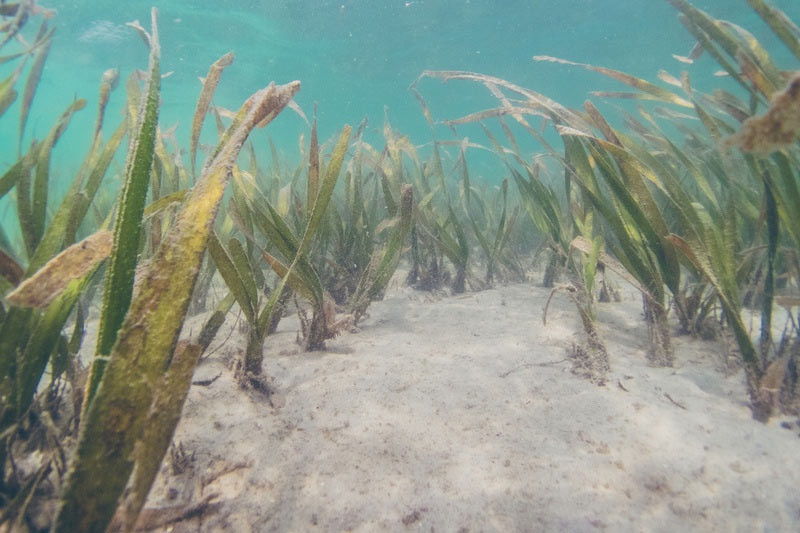
There’s an odd bunch of people with a strange sounding passion – a passion for seagrass. You’d think that anything with grass in its name might be boring, especially when compared to ecosystems like tropical rainforests, filled with birds of paradise or the vast savannas of Africa filled with elephants and migrating wildebeests. However, seagrass ecosystems hold a few surprises that might make you change your mind. 1. Seagrass buffers against ocean acidification. Seagrass uses carbon from the surrounding water in order to photosynthesise and grow. As the carbon is taken out of the water and into the plant, the seas acidity decreases. This may protect coral reefs from bleaching and allows corals to have calcification rates that are up to 18% higher. Seagrass helps coral to thrive. 2. Seagrass protects our coastline. As well as helping coral reefs, seagrass also helps to stop our coastlines from being eroded away. Even when a turtle has got the munchies and nibbled the seagrass right down to the roots, or a storm has come through ripping some of the meadow away, then seagrass still protects our coastlines despite its damaged state. The remaining stumps and strands reduce the energy crashing on to our shore lines by slowing wave speeds. A green turtle munching on seagrass. 3. It’s still sensitive! Just because seagrass keeps giving when damaged does not mean it is surviving. Seagrass restoration is a tricky and slow process. The conditions must be just right- when the surrounding bed is damaged the water will be flowing faster, taking with it any seeds or new shoots, as soon as the bed is damaged a vicious cycle of degradation begins. Scars in a meadow as a result of boat propellers ripping up the seagrass. 4. Endangered animals call seagrass home. When our local shop has sold out of iceberg lettuce, then we can try something else green and leafy, maybe some spinach. A lot of seagrass residents don’t have this luxury however, for dugongs it’s munching on seagrass or a rumbling tummy. Many endangered seahorse species can relate to this reliance on seagrass as it’s their one safe home where they can blend in and hide in the scenery. A grazing dugong. 5. It helps put food on our plates! When a meadow is in good condition then it provides protection for juvenile fish, including those which are commercially important. The Walleye Pollock, for example, is one of the world’s top 10 most landed fishery species and it commonly relies on seagrass to be a safe haven for it’s young to grow big and strong before ending up on our plates. For some communities the plant itself is also an important food source; the Seri grind the seeds to make a porridge like substance and others eat a part of the plant called the rhizome, raw. Florida Bay scallop growing strong in a seagrass bed.