Tag: seagrass meadows

Seagrass Fish Fence

The Use of Seagrass in Flood Defences and Reducing Beach Erosion

Ewan Garvey, one of Project Seagrass’ Interns for the 2025-26 academic year, explores how seagrass can provide protection for coastal communities. As the seasons transition from autumn into winter, storms often become a pressing concern for coastal communities. In recent years, the growing impacts of climate change have become increasingly

Read More »
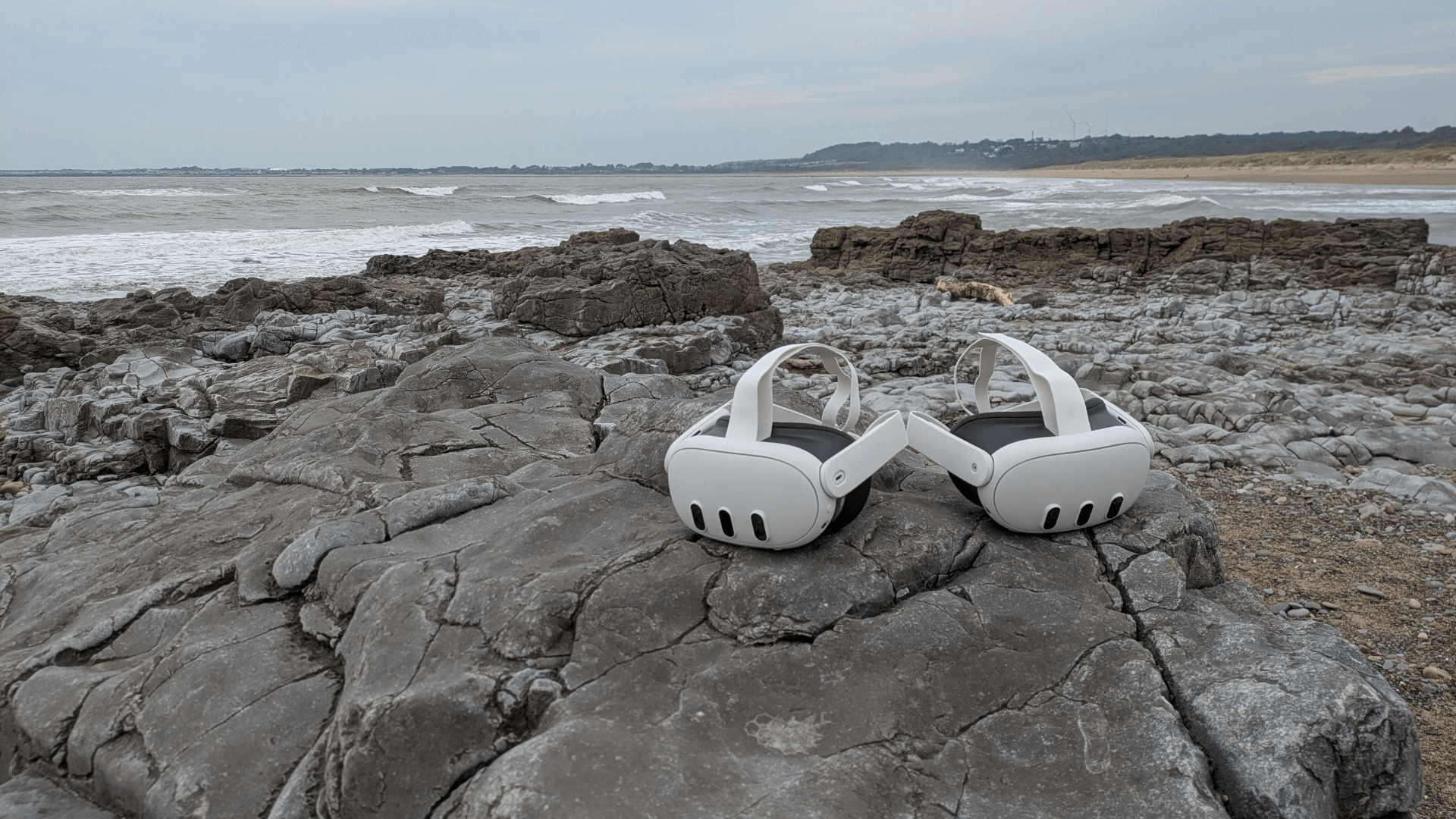
Two VR headsets are placed on the rocks at the coast at Ogmore in South Wales.

My Seagrass Adventure: New Immersive VR Experience Launched

On the 25th and 26th October, the team from Project Seagrass attended Swansea Science Festival to launch new VR experience: My Seagrass Adventure. The experience has been created as part of an innovative partnership between Project Seagrass, Proper Good Films, and Onyva Studio and takes users on a mesmerising journey

Read More »
Seagrass Fish Fence

The Use of Seagrass in Flood Defences and Reducing Beach Erosion

Ewan Garvey, one of Project Seagrass’ Interns for the 2025-26 academic year, explores how seagrass can provide protection for coastal communities. As the seasons transition from autumn into winter, storms often become a pressing concern for coastal communities. In recent years, the growing impacts of climate change have become increasingly clear: extreme weather events once considered “once-in-a-decade” now seem to strike far more frequently. In response, governments and communities are looking for protective solutions, investing heavily in sea defence systems, ranging from sandbags to seawalls. But what if nature has already developed a solution? Enter seagrass. Seagrass’s unique characteristics make it a powerful ally in protecting coastlines. Unlike concrete walls or other flood defence systems, seagrass meadows work with natural processes to reduce erosion and flooding, while also creating vital habitat for marine life. How Seagrass Protects Our Shores Root FixationMuch like how trees stabilise the soil in forests, seagrass root systems anchor sand and mud in place, reducing sediments from being washed away during storms. This helps to maintain the structure of beaches, providing more stable coastal habitats. Dissipation of Wave EnergyWhen waves pass over seagrass meadows, the blades create friction. This slows the water, disperses energy, and reduces the force that reaches the shoreline. This means water travels up the beach less and can lessen flooding events. Challenges Hard-engineered coastal defences such as rock armour can cost upwards of £1 million for just a 35-metre section. Seagrass restoration is also expensive, and to date has been largely funded through philanthropic and government funding mechanisms. Seagrass restoration is not without challenges; newly planted seeds are vulnerable to being washed away or buried by shifting sediment before they can properly establish. Seagrass also requires good water quality; too much pollution can prevent seedlings from developing. In many areas, improving river and coastal water quality must go hand in hand with restoration for projects to succeed. A Blended Solution Is seagrass the silver bullet for coastal protection? Not entirely. By blending natural and engineered approaches, we can create more sustainable, resilient coastlines—ones that not only protect us from storms but also support thriving marine ecosystems. Combining engineered solutions such as breakwaters or seawalls with seagrass meadows could reduce wave energy and sediment loss, which would lower the stress on the artificial defences. This could result in cheaper, smaller sea defence structures, reducing both environmental impact and cost. References and Extra Research “Seagrass as a nature-based solution for coastal protection” by Forrester, Leonardi, Cooper & Kumar (2024) Infantes et al. (2022) — Seagrass roots strongly reduce cliff erosion rates in sandy sediments Donatelli et al. (2018) — “Seagrass Impact on Sediment Exchange Between Tidal Flats and Salt Marsh, and The Sediment Budget of Shallow Bays” Bricheno, L. M., et al. “Climate change impacts on storms and waves relevant to the UK and Ireland.” MCCIP Science Review 2025 (2025).

Read More »
Underneath the surface of the water is a dense seagrass meadow

Passive vs Active Marine Restoration: Why Both Are Crucial for Ocean Health

Jasper Brown, one of Project Seagrass’ Interns for the 2025-26 academic year and 3rd Year Student in BSc Zoology with Marine Zoology at Bangor University, explores the need for both active and passive restoration to secure a future for our important seagrass habitats. Marine ecosystems worldwide are under threat. Rising temperatures, ocean acidification, and water pollution are just a few of the key drivers in the decreasing quality of our marine ecosystems. Researchers have found that many aquatic species are shifting poleward at an average rate of 70 kilometres every decade (Melbourne-Thomas et al., 2021) – a vast response to changing conditions. Species such as the American Lobster, Cushion Star, and Humboldt Squid have nearly doubled their latitude range, showing the clear extent of this poleward shift in marine species (Pinsky et al., 2020).   Why are they moving? One crucial reason is habitat loss. Seagrass meadows, coral reefs, and kelp forests are disappearing worldwide, reducing opportunities for biodiversity and removing essential nursery habitats for marine life.   The solution is clear: we must conserve and restore.   Across the globe, charities and organisations are embracing active restoration – direct interventions to rebuild habitats.    The work consists of planting seagrass, reforesting mangroves, and coral Gardening. All of which provide crucial environmental benefits: large carbon sinks, coastal protection, and providing nursery habitats.     Seagrass planting involves transplanting seeds and rhizomes near existing meadows (do Amaral Camara Lima et al., 2023).   Coral gardening uses nurseries to grow coral fragments, which are later transplanted to reefs that support approximately 25% of all marine species (Rinkevich, 2014; Gallagher, 2025; Pacific Coastal and Marine Science Center, 2022).   Mangrove reforestation involves planting seedlings along suitable coastlines (Zahra Farshid et al., 2022; Bimrah et al., 2022).     These methods are being implemented worldwide, from the Persian Gulf in western Asia to the Firth of Forth in Scotland. Yet, challenges persist. Active restoration projects are costly, often relying on charitable donations and grants (Paling et al., 2009). Despite these hurdles, active restoration works, a recent review by Danovaro (2025), found an average success rate of 64% across 764 projects.   Is active restoration enough? However, success depends on environmental conditions; water clarity, for example, is critical for seagrass survival due to photosynthesis requiring sufficient light. Declining clarity, driven by pollution, bottom trawling, and dredging, increases turbidity, which limits restoration efforts (Paling et al., 2009).   This is where passive restoration comes in Passive strategies focus on removing environmental pressures and creating conditions for ecosystems to heal naturally. Examples include implementing policies to regulate fertilizer use and reduce nutrient runoff, as well as enforcing Marine Protected Areas (MPAs). These acts will reduce eutrophication in our waterways and lead to a more stable marine environment, leading to the eventual reduction in coral bleaching and seagrass meadow reduction. MPAs have been shown to restore ecosystem functions such as predation (Cheng et al., 2019), highlighting their critical role in maintaining biodiversity.  Conclusion While MPAs are just one example, they perfectly highlight the value of passive restoration in its entirety. The greatest benefits come from integrating passive and active approaches. By enforcing regulations and establishing strict no-trawl zones, we can reduce nutrient loads and sedimentation. Through these efforts, our marine ecosystems will one day thrive again, meaning we get to see the animals and plants we so dearly care about. References Bimrah, K., Dasgupta, R., Hashimoto, S., Saizen, I., & Dhyani, S. (2022). Ecosystem Services of Mangroves: A Systematic Review and Synthesis of Contemporary Scientific Literature. Sustainability, 14(19), 12051. https://doi.org/10.3390/su141912051  Bulmer, R. H., Townsend, M., Drylie, T., & Lohrer, A. M. (2018). Elevated Turbidity and the Nutrient Removal Capacity of Seagrass. Frontiers in Marine Science, 5. https://doi.org/10.3389/fmars.2018.00462  Cheng, B. S., Altieri, A. H., Torchin, M. E., & Ruiz, G. M. (2019). Can marine reserves restore lost ecosystem functioning? A global synthesis. Ecology, 100(4), e02617. https://doi.org/10.1002/ecy.2617  Danovaro, R., Aronson, J., Bianchelli, S., Boström, C., Chen, W., Cimino, R., Corinaldesi, C., Cortina-Segarra, J., D’Ambrosio, P., Gambi, C., Garrabou, J., Giorgetti, A., Grehan, A., Hannachi, A., Mangialajo, L., Morato, T., Orfanidis, S., Papadopoulou, N., Ramirez-Llodra, E., & Smith, C. J. (2025). Assessing the success of marine ecosystem restoration using meta-analysis. Nature Communications, 16(1). https://doi.org/10.1038/s41467-025-57254-2  do Amaral Camara Lima, M., Bergamo, T. F., Ward, R. D., & Joyce, C. B. (2023). A Review of Seagrass Ecosystem services: Providing nature-based Solutions for a Changing World. Hydrobiologia, 850(12-13), 2655–2670. https://doi.org/10.1007/s10750-023-05244-0  Gallagher, M. (2025, August 24). What Ecosystem Services Do Coral Reefs Provide? – Green Packs. GreenPacks. https://greenpacks.org/what-ecosystem-services-do-coral-reefs-provide/  Melbourne-Thomas, J., Audzijonyte, A., Brasier, M. J., Cresswell, K. A., Fogarty, H. E., Haward, M., Hobday, A. J., Hunt, H. L., Ling, S. D., McCormack, P. C., Mustonen, T., Mustonen, K., Nye, J. A., Oellermann, M., Trebilco, R., van Putten, I., Villanueva, C., Watson, R. A., & Pecl, G. T. (2021). Poleward bound: adapting to climate-driven species redistribution. Reviews in Fish Biology and Fisheries. https://doi.org/10.1007/s11160-021-09641-3  Pacific Coastal and Marine Science Center. (2022, June 27). Role of Reefs in Coastal Protection | U.S. Geological Survey. Www.usgs.gov. https://www.usgs.gov/centers/pcmsc/science/role-reefs-coastal-protection  Paling, Fonseca, M., Katwijk, M., & Keulen, van. (2009). Seagrass restoration. In Coastal wetlands: an integrated ecosystems approach. (pp. 687–713).  Rinkevich, B. (2014). Rebuilding coral reefs: does active reef restoration lead to sustainable reefs? Current Opinion in Environmental Sustainability, 7, 28–36. https://doi.org/10.1016/j.cosust.2013.11.018  Zahra Farshid, Reshad Moradi Balef, Tuba Zendehboudi, Dehghan, N., Mohajer, F., Siavash Kalbi, Hashemi, A., Afshar, A., Tabandeh Heidari Bafghi, Hanieh Baneshi, & Amin Tamadon. (2022). Reforestation of grey mangroves (Avicennia marina) along the northern coasts of the Persian Gulf. Wetlands Ecology and Management, 31(1), 115–128. https://doi.org/10.1007/s11273-022-09904-1 

Read More »
Two VR headsets are placed on the rocks at the coast at Ogmore in South Wales.

My Seagrass Adventure: New Immersive VR Experience Launched

On the 25th and 26th October, the team from Project Seagrass attended Swansea Science Festival to launch new VR experience: My Seagrass Adventure. The experience has been created as part of an innovative partnership between Project Seagrass, Proper Good Films, and Onyva Studio and takes users on a mesmerising journey through the UK’s seagrass meadows. Featuring music from Project Seagrass’ patrons Coldplay and narration from Simon Pegg, My Seagrass Adventure allows users to explore a variety of creatures that call seagrass meadows home and learn about the importance of the UK’s seagrass habitats. The experience aims to widen awareness of seagrass habitats and allow communities who wouldn’t ordinarily have the opportunity to see seagrass to connect with the habitat. Dr Leanne Cullen-Unsworth, CEO of Project Seagrass said: “This project has been a fantastic opportunity to create an immersive experience that allows anyone to explore the sights and sounds of our incredible UK seagrass meadows. One of the key challenges we face with seagrass, as with many marine ecosystems, is that it largely exists out of sight. By giving people virtual access to these underwater habitats, we can connect with many more people and plant the seed of seagrass appreciation. After all, we need to know about something and understand its value before we can truly care about protecting it.”   Andrew Brown, Creative Partner at Onyva Studio said: “It’s been great working with the team at Project Seagrass to bring this experience to life. Seeing people put the headset on at an event and feel like they are really diving down to the ocean floor is thrilling. We’re super proud to have been part of such an important and exciting project.”  Ben Mann, Managing Director at Proper Good Films said: “This was a fantastic collaboration between Project Seagrass, Proper Good and Onyva. We loved being part of such a meaningful project, aiming to raise awareness of the importance of seagrass for marine habitats. Having Coldplay and Simon Pegg involved really elevated it to a really impactful, meditative and inspiring immersive experience.” Held at the National Waterfront Museum in Swansea, over 250 people had the opportunity to experience My Seagrass Adventure as part of its official launch. The VR experience has been made possible due to the generous support of a range of funders and partners including Project Seagrass’ patrons Coldplay, Simon Pegg, Swansea University, ERM Foundation, the Seagrass Ocean Rescue: North Wales programme, Richard Unsworth, Rebecca Cullen, and many members of the Project Seagrass team who have contributed to this project.


Read More »