Category: Blogs

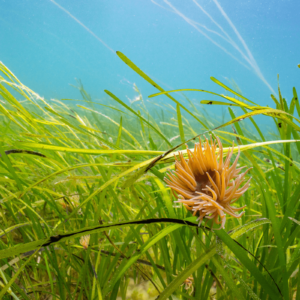
Seagrass in Orkney

Climate Impact Partners and Deloitte Join Forces to Unlock Large-Scale Seagrass Recovery Financing

Climate Impact Partners and Deloitte, in collaboration with Project Seagrass and the UK’s National Oceanography Centre, announce a groundbreaking program to fund UK seagrass recovery and unlock long-term finance to save and reinstate vital seagrass meadows. The program will fund critical research across UK seagrass meadows, mapping the ecosystems and developing methods to restore them

Read More »
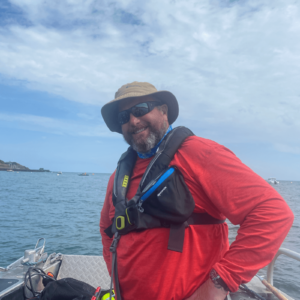
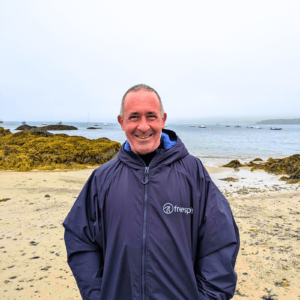
Neil is standing on board Project Seagrass' boat Gwen. He is wearing a hat, sunglasses, and a red coat.

Seagrass Ocean Rescue Volunteer Profile: Neil

The Seagrass Ocean Rescue North Wales programme relies on the commitment and enthusiasm of local volunteers. We spoke to regular volunteer Neil about his experiences of volunteering as part of the programme. Volunteer Interview Tell us a little bit about yourself: I grew up in North Wales, then moved around

Read More »
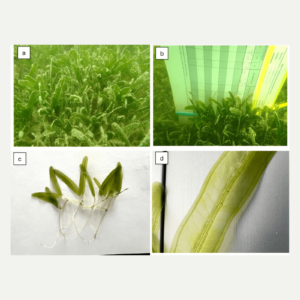
Four photographs of H. Stipulacea arranged in a grid format.

Invasive seagrass species discovered in Biscayne Bay

An invasive species of seagrass has been on a steady march across the world, taking over ecosystems well beyond its native waters of the Red Sea, Persian Gulf and Indian Ocean. Scientists have long wondered when it would reach the waters off the coast of Florida. Florida International University scientists

Read More »
Finstown seagrass seed collection as part of the Restoration Forth August summer seed collection in Orkney.

Project Update: Restoration Forth August 2024

Restoration Forth aims to restore seagrass meadows and native oysters into the Firth of Forth, to create a healthier coastline for people and nature.   Find out more about the project here.  Restoration Forth August Fieldwork | Seagrass highlights from Orkney The seagrass team are not long back from Orkney, where

Read More »
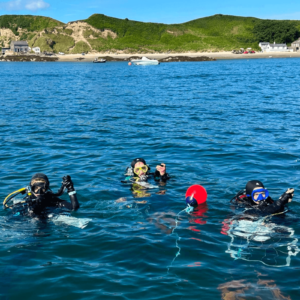
3 divers are in the sea in Porthdinllaen

Fieldwork notes from our summer seed collections

Read our fieldwork notes from our summer seagrass seed collection: North Wales Seed Collection A brilliant start to our annual seed collections, with summer finally arriving right on time! The weather has been fantastic, with underwater visibility not too far off 10m, and not a drop of rain so far…

Read More »
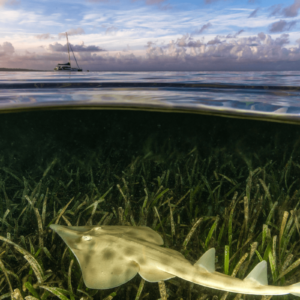
A ray swims through a seagrass meadow.

Scientists and rangers share knowledge to restore seagrass

Scientists from The University of Western Australia have partnered with Indigenous rangers on a seagrass restoration project in Gathaagudu (Shark Bay) to help moderate climate change and conserve biodiversity. Dr. Elizabeth Sinclair and Professor Gary Kendrick, from UWA’s School of Biological Sciences and Oceans Institute, were co-authors of the paper published in Ocean

Read More »
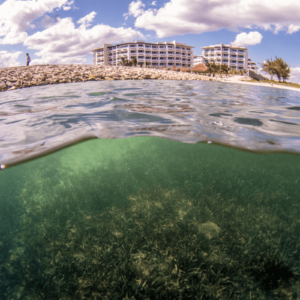
The image shows seagrass growing next to an area of development in Mexico. There is a hotel on the seafront.

Seagrasses filter human pathogens in marine waters

An international team of researchers discovered that coastal urban seagrass ecosystems can significantly reduce human bacterial pathogens, including those with widespread antibiotic resistance, in marine bivalves—a vital food source for people around the world. The study, published Aug 2 in the journal Nature Sustainability, sheds light on the significant role seagrass meadows play

Read More »
Bob is standing on Porthdinllaen beach wearing a dryrobe. He has his hands in his pockets.

Seagrass Ocean Rescue Volunteer Profile: Bob

As our 2024 seagrass seed collection in North Wales draws to a close we spoke to Seagrass Ocean Rescue volunteer Bob Pethers about his experience of volunteering as part of the project. Tell us a little bit about yourself: I’m Bob Pethers, originally from London but have lived and worked

Read More »
Seagrass in Orkney

Climate Impact Partners and Deloitte Join Forces to Unlock Large-Scale Seagrass Recovery Financing

Climate Impact Partners and Deloitte, in collaboration with Project Seagrass and the UK’s National Oceanography Centre, announce a groundbreaking program to fund UK seagrass recovery and unlock long-term finance to save and reinstate vital seagrass meadows. The program will fund critical research across UK seagrass meadows, mapping the ecosystems and developing methods to restore them at scale. Crucially, this work will support the development of a new seagrass carbon code in the UK and beyond – enabling companies to finance seagrass recovery at greater speed and scale. Despite seagrass’ crucial role in sequestering carbon, protecting coastlines, and supporting marine biodiversity; seagrass restoration has been underfunded, with nearly a third of seagrass lost globally in the last century. This program will look to address the barriers that prevent finance flowing to seagrass restoration, including improving the scientific knowledge of carbon sequestration, piloting new techniques for seagrass propagation and engaging communities in meadow restoration. This program forms a key part of Deloitte’s Beyond Value Chain Mitigation (BVCM) activities, supporting innovative solutions outside their value chain. Deloitte is using skills, influence and targeted investment to catalyze environmental and social impact across the energy transition, circularity, sustainable food systems and nature restoration. “Reaching net-zero will require the global economy to decarbonize as part of a connected system,” said Smruti Naik-Jones, Chief Sustainability Officer of Deloitte UK and North & South Europe. “This incredible seagrass program, developed by Climate Impact Partners, enables us to learn more about these marine ecosystems, fund critical research and help unlock a powerful tool in the fight against the climate crisis.” “Deloitte is demonstrating true climate leadership through this program. Seagrass offers a unique opportunity to mitigate climate change while delivering significant co-benefits for biodiversity and coastal communities,” said Kirsty Schneeberger, Head of Product Innovation at Climate Impact Partners. “Imagine seagrass meadows as underwater vaults – they lock away enormous amounts of carbon for long periods, potentially millennia, as long as they remain healthy and undisturbed. We need to ensure they receive long-term and large-scale financing to accelerate the restoration and protection of these underwater wonders.” https://www.youtube.com/watch?v=1sEISirUSn0 “We need to protect and restore seagrass whilst supporting the continuation of sustainable human activities that occur amongst or depend directly upon seagrass ecosystems”, said Dr Leanne Cullen-Unsworth, Chief Executive Officer and Charity Co-Founder, Project Seagrass. “We need to do this now, as a connected global community. This program helps to deliver this.” “Seagrass meadows are the powerhouses of coastal seas providing a nature-based solution to climate change, said Dr Claire Evans, Biogeochemist, the UK’s National Oceanography Centre. “They have been neglected for decades, which has led to their large-scale degradation and loss. This program exemplifies how we can turn that loss into an opportunity for environmental renewal through large-scale restoration.” In coordination with Project Seagrass, a team of volunteers from Deloitte and Climate Impact Partners helped harvest seedlings from a healthy seagrass meadow for the recovery program.

Read More »
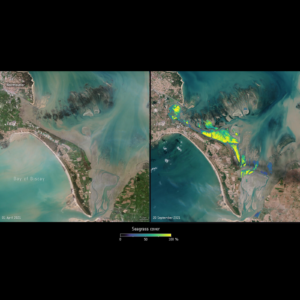
Two images show the difference in the presence of intertidal seagrass in the Bay of Bourgneuf, located north of the Bay of Biscay, off the western coast of France. The image on the left, from April 2021, shows sparse intertidal seagrass, while the image on the right, from September 2021, reveals abundant growth.

Sentinel-2 data reveal significant seasonal variations in intertidal seagrass

With data from the Copernicus Sentinel-2 mission, researchers have revealed seasonal variations in intertidal seagrass across Western Europe and North Africa. As a key indicator of biodiversity, these new findings offer valuable insights for the conservation and restoration of these vital ecosystems. The intertidal zone is the area where the ocean meets the land between high and low tides, and here seagrasses can form extensive meadows. These flowering marine plants provide critical habitats, acting as shelter, nurseries, and feeding and spawning grounds for a diverse range of birds, fish and invertebrates. Beyond their ecological importance, seagrass meadows also stabilize sediments and protect coastlines from erosion. Monitoring the occurrence, extent, condition and diversity of intertidal seagrass as a key biodiversity variable is essential for assessing the overall health of local ecosystems. Current global estimates of seagrass coverage do not differentiate between seagrasses in the intertidal zone and those in the subtidal zone, which remain submerged below the sea surface. However, a recent paper, published in Communications Earth & Environment, details how a team of scientists used high-resolution imagery from the Copernicus Sentinel-2 mission to demonstrate its ability to map intertidal seagrass meadows and their seasonal changes across continents with consistency and precision. Bede Ffinian Rowe Davies from Nantes University in France and lead author of the paper, said, “Coastal regions, like much of the world, are experiencing rapid and alarming biodiversity loss. To address this, it’s crucial to develop efficient monitoring methods so that timely and appropriate action can be taken to preserve delicate ecosystems. “Using data from Sentinel-2 within the BiCOME project, we were able to reveal significant seasonal variations in intertidal seagrass. The peaks in extent shifted by as much as five months—challenging previous assumptions that there was little or no seasonal fluctuation.” The satellite images below illustrate changes in intertidal seagrass cover in the Bay of Bourgneuf, located north of the Bay of Biscay, off the western coast of France. The image on the left, from April 2021, shows sparse intertidal seagrass, while the image on the right, from September 2021, reveals abundant growth. Victor Martinez-Vicente, BiCOME project principal investigator, noted, “This study demonstrates the potential of satellite observations to track changes in the extent of natural coastal ecosystems, providing valuable insights for indicators in the Global Biodiversity Framework. Further research is needed to develop long-term satellite-based monitoring systems and datasets to support global progress toward achieving the framework goals.” ESA’s Marie-Helene Rio added, “These new findings clearly demonstrate the value that Sentinel-2 can bring to monitoring intertidal seagrass. We now believe that these intertidal meadows behave differently to the type of seagrass that spends most of its life submerged by seawater. This suggests that previous estimates, which grouped the two types together, could be misleading. The research paves the way to further monitoring and assessment of intertidal seagrass meadows using Sentinel-2 data.” The Sentinel-2 satellites each carry a multispectral imager that takes high-resolution images of Earth’s land, islands, and inland and coastal waters. And with a large swath width of 290 km, it provides these images in 13 spectral bands with resolutions of 10 m, 20 m and 60 m. The third Sentinel-2 satellite, Sentinel-2C, was launched on 5 September 2024, and has already delivered its first images of Earth. More information: Bede Ffinian Rowe Davies et al, A sentinel watching over inter-tidal seagrass phenology across Western Europe and North Africa, Communications Earth & Environment (2024). DOI: 10.1038/s43247-024-01543-z This article is republished from PHYS.ORG and provided by the European Space Agency. Explore our blog for insights on the latest research from across the globe. Click here

Read More »
Neil is standing on board Project Seagrass' boat Gwen. He is wearing a hat, sunglasses, and a red coat.

Seagrass Ocean Rescue Volunteer Profile: Neil

The Seagrass Ocean Rescue North Wales programme relies on the commitment and enthusiasm of local volunteers. We spoke to regular volunteer Neil about his experiences of volunteering as part of the programme. Volunteer Interview Tell us a little bit about yourself: I grew up in North Wales, then moved around a lot during a career in the automotive industry. After Covid, there was an opportunity to step out and do something different, so it was time to do things I wanted to do rather than had to do. How did you first get involved with the seagrass restoration community project? I’d seen the team operating in Porthdinllaen , read about it, and started to preach about it to anyone that was unfortunate to be in hearing range! Then there was a stroke of luck and I managed to inflict myself upon the boat crew for a few days. What are your hopes for this restoration work? That the word spreads, that more people who don’t mean to negatively affect the environment can learn not to, and that I can keep visiting the areas that we are developing and planting to see them flourish and provide a starting base for more wildlife to move in. It’s great to see how quickly nature can respond, given a chance. I’ve learnt that it’s very subtle changes we make that can help or hinder the natural environment. What inspired you to get involved, what drives your commitment to this cause? I’d just semi-retired, had wandered past the boat team working in Porthdinllaen, did some reading, started to tell others about it, then it was a lucky break to be involved in one of the boat teams. Then it just got out of control from there really! I go snorkelling, boating, and diving and I get frustrated when I see the natural environment being needlessly abused, so this is just one way to try and stop that. The amazing areas of the world provide lots of fun, inspiration and happiness for so many people, sometimes the consequence is pressure on the very thing we go to see, by providing more of those areas then it’s good for everyone.  What does it mean to you to spend time in nature, what do you feel nature provides you with? It’s great to see how quickly nature can respond, given a chance. I’ve learnt that it’s very subtle changes we make that can help or hinder the natural environment.  What seagrass restoration activities have you taken part in? So far, planting both seeds and shoots, harvesting new seeds and monitoring. Learning from the different team members, chatting with ambassadors and meeting other people that are getting involved.  What part of this restoration work are you most proud of? I think it’s the planting, because when we go back to monitor progress and after only a few months we see that nature has already started to move in, then that’s a good thing. The Seagrass Ocean Rescue Project is managed by WWF, in partnership with Project Seagrass, the North Wales Wildlife Trust, Pen Llŷn a’r Sarnau Special Area of Conservation (SAC) and Swansea University. The project is made possible with support from funders that include the National Lottery Heritage Fund, Garfield Weston Foundation, and the Moondance Foundation. If you would like to volunteer as part of the project contact volunteers@projectseagrass.org Principal Funders Partners

Read More »
Four photographs of H. Stipulacea arranged in a grid format.

Invasive seagrass species discovered in Biscayne Bay

An invasive species of seagrass has been on a steady march across the world, taking over ecosystems well beyond its native waters of the Red Sea, Persian Gulf and Indian Ocean. Scientists have long wondered when it would reach the waters off the coast of Florida. Florida International University scientists say that day has arrived. Florida International University marine scientist Justin Campbell has positively identified Halophila stipulacea growing in Crandon Marina and nearby areas of Biscayne Bay. It is the first time this non-native species has been found in waters along the continental United States. The study appears on the preprint server bioRxiv. “I think this species could pose a considerable threat,” Campbell said. “There are several reports of it being able to outcompete native seagrasses in other areas across the Caribbean. It is plausible that this could also be true for seagrasses here in South Florida.” A marina worker first noticed the seagrass last month and reached out to Campbell, who conducted tests to determine the species. Halophila stipulacea first started spreading its distribution with the opening of the Suez Canal in the late 1800s, hitching rides on the anchors and other parts of boats. By the early 2000s, it was found in the Caribbean.   Field photographs of H. Stipulacea inside Crandon Marina (Key Biscayne, Florida) (a,b). Close-up detail of samples collected inside the marina, structure and leaf cross veins (c,d). Credit: Matthew White (a,b) and Justin Campbell (c,d). Healthy seagrass meadows are vital for healthy oceans. They are nursery habitats for commercially and economically important fish as well as shrimp, stone crabs, scallops and other crustaceans and shellfish. Seagrasses are a primary food source for sea turtles, manatees and other marine herbivores. And for the health of the planet, seagrasses are really good at sucking carbon emissions out of the air and storing that carbon long-term. While scientists are still working to understand possible impacts from the invasive species entering waters around the U.S., early research suggests some fish species may avoid the shorter seagrass when scouting nursery locations and local sea turtles in the Caribbean avoid eating the invasive seagrass, preferring native species as part of their regular diets. While most species of seagrass are on the decline from warming waters and other human-induced impacts, Halophila stipulacea has the unique ability to grow quickly and adapt to different conditions including salinity levels, temperature and light availability. Just a small piece can float through water and grow. Once it settles into soil, it can take hold easily and grow at a variety of depths. While most seagrass species require shallower depths to attain sunlight, Halophila stipulacea has been observed flourishing at depths of 60 feet or more. “The arrival of yet another invasive species to Florida is a reminder that all of our earth is interconnected and that human actions have the power to change the planet, for good or bad,” said James Fourqurean, co-author of the research and director of the Coastlines and Oceans Division in FIU’s Institute of Environment. Fourqurean has studied seagrasses, especially those in Florida, for more than 40 years. A foremost expert, he is one of the lead scientists in the International Blue Carbon Working Group, as well as scientific representative to the International Blue Carbon Policy Working Group—both dedicated to the recognition and preservation of seagrass meadows, mangroves and tidal salt marshes as critical contributors to slowing the rise of CO2 in the atmosphere. “Given the importance of seagrasses to a healthy South Florida, we now need to do what we can to limit the spread of this invasive species and be wary of disruptions to the natural order it may cause,” Fourqurean said. Stipulacea has a very different appearance and structure than the native seagrasses in South Florida and throughout the Caribbean. At least 19 Caribbean islands have reported this seagrass growing in nearby waters and, in some cases, overtaking meadows of native grass. “We don’t know whether Stipulacea provides similar ecological benefits as compared to our native species,” Campbell said. “Our seagrass meadows here are some of the most pristine and well-protected in the Western Hemisphere. They are iconic and emblematic. We certainly don’t want to lose them.” So how long has this non-native species been in South Florida? It is hard for Campbell to say, but based on the current distribution, he believes it first started taking root several years ago. It had gone unnoticed because, to the casual observer, it can be difficult to distinguish from native vegetation, he said. Crandon Marina can accommodate medium and large sized sailboats, likely capable of travel to and from areas where Stipulacea is well-established. This is one possible and likely way the non-native seagrass reached Biscayne Bay. With other large marinas in the region, Campbell said surveys and monitoring should be expanded now that this invasive species is confirmed to be in South Florida. More information:Justin E. Campbell et al, First record of the seagrass Halophila stipulacea (Forskkal) Ascherson in the waters of the continental United States (Key Biscayne, Florida), bioRxiv (2024): DOI: 10.1101/2024.09.02.610701 This article is republished from PHYS.ORG and provided by the Florida International University. Explore our blog for insights on the latest research from across the globe. Click here

Read More »
Finstown seagrass seed collection as part of the Restoration Forth August summer seed collection in Orkney.

Project Update: Restoration Forth August 2024

Restoration Forth aims to restore seagrass meadows and native oysters into the Firth of Forth, to create a healthier coastline for people and nature.   Find out more about the project here.  Restoration Forth August Fieldwork | Seagrass highlights from Orkney The seagrass team are not long back from Orkney, where they spent just under a month conducting this year’s seagrass seed harvest as part of the Restoration Forth August fieldwork. Many snorkel sessions were conducted to harvest seed baring reproductive shoots to further drive our restoration trials here in the Forth. Despite the fair-weather conditions and ample snorkel sessions the team have returned with slightly less material than what was collected last year. However, this should not prohibit our restoration ambitions next spring. Whilst in Orkney the team were able to deliver a range of community events, which included participating in this year’s Stromness shopping week.  MSPs Ariane Burgess and Liam McArthur joined Restoration Forth’s community snorkel sessions in Orkney where, along with members of the local community, they met the team and learned about how projects like Restoration Forth aim to restore nature and drive future restoration.  Increasing knowledge amongst elected representatives about the importance of these habitats is an important part of highlighting the need for the Scottish Government to bring forward legislation to protect and restore Scotland’s nature.   In addition to the seeds collected from Orkney, the team will be visiting the Moray Firth. In the first week of September the team will meet up Mossy Earth and Moray Ocean Community to organise an intertidal seagrass pick. This community and knowledge exchange intends to bring our projects closer together and further our collective knowledge.  Intertidal seeds gathered from the Moray coast will provide insights into whether there are differences in germination rates between subtidal and intertidal seeds. Newhaven Oyster Mural is going ahead! We are pleased to announce that the Oyster Mural planned for the Heart of Newhaven’s Anchor building has been granted planning permission. Thank you to everyone who was involved in workshopping ideas for the design, including Victoria Primary school.     Natasha Russell, Edinburgh based illustrator and mural artist, has created the design to incorporate many of the local species that people expressed an interest in.  The mural aims to engage passers by with the wonders of local biodiversity.   Captured within the oyster shells in the design, there are scenes and stories that represent the cultural importance of oysters in the Forth, including the fishing of, and release of oysters into the water.  It celebrates the oyster’s return to the Forth and their key role within the local ecosystems, whilst acknowledging the deep local history with the oyster fishing trade.    The mural will be painted in September.  Come along to the Doors Open Day at the Heart of Newhaven on the 28th September at 11.00, to see the unveiling of the mural.

Read More »
3 divers are in the sea in Porthdinllaen

Fieldwork notes from our summer seed collections

Read our fieldwork notes from our summer seagrass seed collection: North Wales Seed Collection A brilliant start to our annual seed collections, with summer finally arriving right on time! The weather has been fantastic, with underwater visibility not too far off 10m, and not a drop of rain so far… Here’s hoping it holds out until next week! It’s been a very busy start, but here’s just a few of the highlights: Day 0.5 – Day 1 | Saturday 27th – Sunday 28thAfter arriving in good time on Saturday afternoon and launching Gwen with no troubles, the team spent Sunday morning moving all our equipment into Cabin Gryff and Gwen, before setting up the temporary seed storage tanks. We then went through a few rescue refreshers.  The dive team set up the keep nets on the RNLI buoys, which will be home to all the seeds collected by both teams during the trip. The team practiced diver recovery drills, before finishing the day with a first seed collection dive  The snorkel team went out seed collecting, but having missed the morning Low Tide, learnt the hard way that duck diving for seeds is rather tiring! Day 2 | Monday 29thThe snorkel team, led by Amel, started the day as they will throughout the trip, with seed tank water changes!  They then had a far more successful seed collection snorkel, bagging plenty of seeds. Charles has also started his VR footage collection using the 360 camera, capturing some fantastic images of the meadow. Fingers crossed some fun species ‘take the bait’. Meanwhile, Manning has been sampling sites as part of his Masters project, with the help of Richard, who has been out flying the drone round the LLyn, taking advantage of the clear skys!  The dive team completed three meadow health surveys, which will help us assess the current state of the Porthdinllaen meadow, and monitor any potential impact of our seed collections going forward. We were joined by Katie Dubois, a lecturer at Bangor University, who helped with our afternoon seed collection dives. The meadow is bursting with seeds, so we should be set for a good collection!  Day 3 | Tuesday 30thThe snorkel team had their best collection yet today, and were in the water battling the cold for a good 4 hours! Another big haul of seeds! The dive team ticked off half the mechanisation surveys, which will help wrap up the mechanisation project. We then went seed collecting, whilst dropping down Charles’s VR camera to catch some footage.  Day 4 | 31st JulyWe arrived early to set up our stand ready for our FIRST volunteers. We also welcomed our Ambassador Miranda Krestovnikoff. Day 5 | 1st AugustOne quick water change later and we’re back in the water! We started by taking the VR camera out to get a series of snorkeling shots through and coming out of the seagrass meadow before placing down for an hour-long shot. We then proceeded to pick seeds joined by Leanne and Miranda. Once again, a perfect dive, with pristine waters and life abundant. To end our day off we did a quick evening session with the VR camera. It was an amazing shoot with many fish species and a perfect way to end the day.  Day 6 | 2nd AugustToday we rested. Day 7 | 3rd AugustAfter an excellent rest day we proceeded to begin our week of volunteer seed collections.  We started the day by transporting volunteer divers off before getting everything prepared for the snorkel volunteers. The day went brilliantly, with all snorkelers/waders returning, smiling and with happy faces. We chatted, and met so many fantastic people! Day 8 | 4th AugustOnce again, Amel and Emma were up bright and early to transport volunteer divers before joining the rest of the day. We joined WWF for a Philanthropy Day, a day for all of our donors and backers. The day started with a quick meal before returning to set up all equipment and stand ready to take our donors for a quick snorkel. All came back with smiles and a successful day all around. The dive team been out every day for seed collections, seed collections, seed collections! Jake Davies and Neil Shone have joined throughout, and we had Dr Katie Dubois (Bangor University) with us again on Sunday! Day 9 | 5th AugustA windy and rainy storm has scarpered all snorkelling activities! We’ve all but finished the mechanisation trial surveys (there’s a few buoys missing so we may have to return and drop shot lines on the coordinates). The best news is there are still lots of seeds coming up after every dive! We’ve all but filled three keepnets (the total we managed last year), so hopefully we should be well on target for 1.5 million by the end of the trip! We’ll be out to install another keepnet tomorrow. Volunteers divers have also been joining since Saturday, with great feedback from all. Day 10 | 6th AugustToday was the first of our snorkel and wading volunteering sessions and it went really well! We were joined by 51 volunteers including WWF, Iwan Rheon, the Crown  Estate, North Wales Wildlife Trust (with their Youth Forum and Interns) alongside lots of Project Seagrass volunteers! BBC joined us and interviewed Leanne and Rich! The dive team carried out two more dives (for me at least) with lots of seeds collected. We are into our fourth keepnet of seeds, which exceeds last year’s total already, and we’re hopeful the reproductive shoots are bearing more seeds than previous years too.  Day 11 | 7th AugustCharles, Andrew, and volunteer Antje headed to Porthdinllaen this morning to capture more footage for the VR Project while Andrew and Corinne headed to Hafan y Mor to install a seagrass information sign. Another successful snorkel and wading volunteering session delivered in the afternoon/early evening. Over 30 volunteers joined us including representatives from the Crown Estate, WWF, and North Wales Wildlife Trust. BBC Radio Cymru joined to interview members of the

Read More »

Underwater seagrass seed harvester – Support our Crowdfunder!

Seagrass meadows are essential for the health of our oceans. They provide vital habitats for marine life, improve water quality, and store significant amounts of carbon. Unfortunately, these vital ecosystems are in decline. Here at Project Seagrass, we are on a mission to restore seagrass meadows to help create a healthier world and protect against the impacts of climate change. To achieve this, we are partnering with Tandem Ventures to develop an underwater seagrass seed harvester to help us to more efficiently collect seagrass seeds and scale up the restoration process.  In order to do this, we need your help. We need to raise £30,000 to design, develop, and test this innovative new technology. Supporting our Crowdfunder will make seagrass restoration faster, more efficient, and scalable. Donate Today The Problem Currently, seagrass seed collection relies on divers using scissors – a slow and labour-intensive process. This bottleneck limits large-scale restoration efforts. We need to invent a new and radically better method this summer, while the seagrass is producing seeds. Time is ticking! Our Solution: The Underwater Seagrass Seed Harvester Key Features Automated Operation: Operates far more efficiently, reducing the need for manual labour. Efficient Collection: Gently harvests seeds without damaging the seagrass beds. Boat-Towed Design: Causes minimal disturbance to the seabed while covering large areas quickly. Adjustable: Key elements of the design can be adjusted to most efficiently collect Seagrass seeds in differing environments. Open-Source Design: Thoroughly documented and shareable plans, allowing replication and application worldwide. Join Us in Making a Difference We need to raise £30,000 to make this vision a reality. If we meet our target, the £30,000 will be allocated as follows: £6,500 for design, research and prototyping £15,000 for building the seagrass seed harvester £2,500 for documentation, and £6,000 for testing and iteration. Your support is crucial for the future of our oceans. By backing this project, you’re investing in innovative technology and a healthier planet. Together, we can restore seagrass meadows and protect marine life for generations to come. Donate via our Crowdfunder. Donate Today

Read More »
A ray swims through a seagrass meadow.

Scientists and rangers share knowledge to restore seagrass

Scientists from The University of Western Australia have partnered with Indigenous rangers on a seagrass restoration project in Gathaagudu (Shark Bay) to help moderate climate change and conserve biodiversity. Dr. Elizabeth Sinclair and Professor Gary Kendrick, from UWA’s School of Biological Sciences and Oceans Institute, were co-authors of the paper published in Ocean & Coastal Management. “Solutions that integrate western science and Traditional Ecological Knowledge are key to improving restoration outcomes,” Dr. Sinclair said. Researchers partnered with Malgana Aboriginal Corporation Rangers on a program that included On Country workshop-based knowledge sharing in north-west Western Australia, with a focus on seagrass restoration. Malgana Elder, Auntie Pat Oakley said managing and caring for a living and dynamic Country are at the heart of well-being for all Indigenous Peoples. “The global rate of seagrass decline continues largely due to human activities, including the widespread impacts from climate change,” Professor Kendrick said. “Reversing this decline by restoring seagrass ecosystems and the benefits they provide is challenging and can take decades, even when human impacts are reduced.” The program found with the right resourcing and logistics, there are opportunities to support training workshops that develop expertise in seagrass restoration activities in Shark Bay. Sean McNeair, Malgana man and ranger coordinator, said field-based restoration workshops helped people reconnect with Country through two-way knowledge sharing. “We need to empower the Malgana Aboriginal Corporation Rangers and local Indigenous-led businesses to schedule restoration activities that help build seasonal local economies and increase the ability to restore seagrass at larger scales,” Dr. Sinclair said. More information: Elizabeth A. Sinclair et al, Healing country together: A seagrass restoration case study from Gathaagudu (Shark Bay), Ocean & Coastal Management (2024). DOI: 10.1016/j.ocecoaman.2024.107274 Journal information can be found here: Ocean and Coastal Management This article is republished from PHYS.ORG and provided by the University of Western Australia.

Read More »
The image shows seagrass growing next to an area of development in Mexico. There is a hotel on the seafront.

Seagrasses filter human pathogens in marine waters

An international team of researchers discovered that coastal urban seagrass ecosystems can significantly reduce human bacterial pathogens, including those with widespread antibiotic resistance, in marine bivalves—a vital food source for people around the world. The study, published Aug 2 in the journal Nature Sustainability, sheds light on the significant role seagrass meadows play in their ecosystems. Not only do they serve as crucial habitats for marine life and contribute to biodiversity and clearer waters, but they also act as natural filtration systems, reducing bacterial pathogens in the surrounding waters. This is important because the current economic burden of human infectious diseases in marine environments is estimated at $12 billion annually. Furthermore, the looming threat of antimicrobial resistance, projected to cause over 300 million deaths and cost the global economy $100 trillion, underscores the urgency of such natural interventions. “Our paper presents the first evidence that coastal urban seagrass ecosystems can reduce human bacterial pathogens, several with known widespread antibiotic resistance, in a food source that has the potential to support over half of global seafood production and consumption,” said Joleah Lamb, assistant professor at the University of California, Irvine, Charlie Dunlop School of Biological Sciences, who led the research with Drew Harvell, professor emerita of ecology and evolutionary biology at Cornell. The team analyzed mussels deployed by Washington’s Department of Fish and Wildlife Mussel Watch across 20 Puget Sound beaches with varying seagrass presence. Mussel gills from locations with seagrass showed a 65% reduction in bacterial pathogens compared with those from places without seagrass. Phoebe Dawkins performs seagrass health surveys in Puget Sound. Credit: Cornell University This study adds to Lamb and Harvell’s previous work showing 50% reductions in pathogenic bacteria in Indonesia seagrass meadows, and suggests that intact seagrass ecosystems in both tropical and temperate waters could play a vital role in ensuring safer seafood and enhancing public health. “Seagrasses have untapped potential to contribute to the chain of survival for humans and our coastal biodiversity,” Harvell said. “Seagrass meadows are prime feeding grounds for wild birds and shelter crabs, oysters, mussels and sea stars, and so the role of lower bacteria has yet unmeasured benefit for wildlife as well as humans.” Harvell’s Cornell research team of postdocs, graduate students and undergraduates has been studying the health of seagrass and drivers of decline in the San Juan Islands and Friday Harbor Labs for over a decade. The Cornell-based research team for this project included not only Lamb, but also Phoebe Dawkins, then a graduate student in Harvell’s lab, and undergraduate Evan Fiorenza ’17. The potential applications of this research are vast, Lamb said. As global food demand accelerates, securing safe and sustainable seafood from a healthy ocean is critical. Seagrass meadows, which are already recognized for their high-value services such as nutrient cycling, carbon sequestration and shoreline protection, now present an added layer of public health benefits. The study’s model estimates that 1.1 billion people currently live within 50 kilometers of seagrass ecosystems, highlighting the immediate opportunity to integrate these natural infrastructures into urban planning and conservation strategies. This research aligns with numerous global sustainability initiatives, including the U.N. Decade of Ocean Science for Sustainable Development and the U.N. Decade on Ecosystem Restoration. It provides timely evidence to inform policies and commitments aimed at reversing the decline of seagrass ecosystems, which are disappearing at an alarming rate of 7% per year. The study’s implications extend beyond immediate public health benefits, Lamb said, offering a blueprint for sustainable urban development that leverages nature’s powers to address global challenges. Lamb has called for a concerted effort from policymakers, urban planners and conservationists to recognize and harness the benefits of seagrass ecosystems. “As ecosystems continue to decline globally, there is an urgent need to invest in environmental conservation and assess the value of ecosystem services,” she said. “By doing so, we can make significant strides in addressing the biodiversity and climate crises while simultaneously improving human health and food security.” This research was supported by the Sea Doc Society, a program of the Karen C. Drayer Wildlife Health Center at the School of Veterinary Medicine at the University of California, Davis; the University of California, Irvine; and The Nature Conservancy. https://www.youtube.com/watch?v=Mt3za0G6ack&t=56s Credit: Video produced by Bob Friel and the SeaDoc Society. Narrated by SeaDoc Society Science Director Joe Gaydos. More information: Phoebe D. Dawkins et al, Seagrass ecosystems as green urban infrastructure to mediate human pathogens in seafood, Nature Sustainability (2024). DOI: 10.1038/s41893-024-01408-5 Journal information: Nature Sustainability  This article is republished from PHYS.ORG and provided by the Cornell University.

Read More »
Bob is standing on Porthdinllaen beach wearing a dryrobe. He has his hands in his pockets.

Seagrass Ocean Rescue Volunteer Profile: Bob

As our 2024 seagrass seed collection in North Wales draws to a close we spoke to Seagrass Ocean Rescue volunteer Bob Pethers about his experience of volunteering as part of the project. Tell us a little bit about yourself: I’m Bob Pethers, originally from London but have lived and worked in North Wales for 40 years. I have taken early retirement from the NHS and currently volunteer with North Wales Wildlife Trust and Project Seagrass. How did you first get involved with the seagrass restoration community project? At the end of a Shoresearch rocky shore survey for the North Wales Wildlife Trust we were given a short presentation on seagrass restoration and I realised immediately that this combined my concern for the health of our seas with my enthusiasm for gardening! I ended up on a seagrass monitoring course run by Project Seagrass, and the rest is history. What are your hopes for this restoration work? That it makes a difference to the health of our seas, and it will! What inspired you to get involved, what drives your commitment to this cause? I jokingly say that I’m involved in seagrass restoration purely out of self interest as one of my hobbies is sea fishing, and healthy seagrass meadows lead to healthy fish populations! In reality I’ve always been concerned about the environment and nature and considered myself an environmentalist from when it really wasn’t fashionable. Looking back I realise we could have done more (hindsight is a wonderful thing), but still proud of our efforts to find peat free compost 30 years ago! Now I have the opportunity to make a difference around my local shores, and the thought of thriving seagrass meadows in the future drives me forward on those cold and rainy spring tides. What does it mean to you to spend time in nature, what do you feel nature provides you with? Being in nature enhances my physical and mental health, nothing can beat being in the moment. What seagrass restoration activities have you taken part in? After agreeing a planting area with Project Seagrass, I started off collecting fragments at Porthdinllaen and planting these (after cleaning off other lifeforms and soaking in fresh water for 24 hours) at Traeth Crugan. This has continued with various tweaks to the methodology through research and discussion and evaluating the success rates. Now I concentrate on the big spring tides and planting on mass to maximise success, and on the last survey this year’s plantings had an encouraging 56% success rate. Inevitably I was talking to the Project Seagrass team a lot, and ended up helping with the seed planting (sacks, seed balls and injection), monitoring, and have just completed the circle by snorkelling at Porthdinllaen for seagrass seeds! What part of this restoration work are you most proud of? I’m most proud of all the other volunteers I meet over the course of the year. Their enthusiasm is both inspiring and heartwarming. The Seagrass Ocean Rescue Project is managed by WWF, in partnership with Project Seagrass, the North Wales Wildlife Trust, Pen Llŷn a’r Sarnau Special Area of Conservation (SAC) and Swansea University. The project is made possible with support from funders that include the National Lottery Heritage Fund, Garfield Weston Foundation, and the Moondance Foundation. Principal Funders Partners

Read More »